Continuing on with the mini-course (Family History Quick Start), in lesson 6, I learned that some programs aren’t   the best for creating a family tree, such as Word Perfect. If you remember Word Perfect, you may recall that Microsoft Word couldn’t open Word Perfect files, and if you had a disc with a document created with the program you didn’t have, you were out of luck trying to read the document. How frustrating was that? The best program I think works for me the most is Microsoft Word and Adobe Acrobat, because I can create multiple word documents and import them into Acrobat to make one PDF file. The PDF will preserve pictures, formatting and the text. You don’t have to buy software to open this type of document, and it is accepted by the community as a standard for preserving documents.


The Rich Text Format  is a good alternative to the PDF. It can be opened by almost all word processors and is compatible across platforms. This format will preserve pictures and text. You can easily go back and edit text in this format, whereas a PDF is generally used for final, finished editions. 

Image Source


In lesson 7, the problem most people have are saving their files with descriptive names that are related to the content of the file itself. It is much easier to save the file with a descriptive name, maybe add a note inside the document that has the date that the research was done or the date that the picture or video was taken. When writing your own documents, be sure to include:

1. The date
2. Your Full Name (and full name of the person it’s about if different)
3. A title for your document
4. Add some information that could be cross referenced either in your documents content or description such as your birth date, spouse’s name, references to your children’s names, etc.
5. Number your pages and/or put a footer at the bottom of each page just in case a page gets lost.

Remember to cite your sources so you know where the information came from- very important when trying to back up your research efforts with the facts!


Lesson 8 involves finding ancestors in your family tree that may be famous. Not everyone will have a famous person in their ancestral lines, but it’s worth checking it out, in any case! As you research your family tree, the number of ancestors you have increases exponentially? That means by just going back a few generations, you’re descended from millions of ancestors. Which, in turn, would actually increase your odds of being related to someone famous. You do the math! Your parents each have their own sets of parents and grandparents, and those parents and grandparents have their own set, and so on down the line.  

Steps for finding famous relatives:
1. Research your family tree as much as possible
2. Connect your family tree into one of the large ancestor databases made available online
3. Do a famous ancestor search for a common ancestor to someone famous.
It may sound complicated, but it isn’t too hard if you have the right tools. 

Here is a book link from an email I received from the instructor of this course.

I have always wanted to visit Scotland but now that I’ve discovered that my ancestors lived there once upon a time, it makes me want to go even more. Just to be able to walk the land as they did hundreds of years ago, the culture that surrounded them, their lifestyles, and even the food they they may have eaten. I want to experience Scotland’s history and their culture, I want to stand on the picturesque landscapes where my ancestors may have stood, I also want to be a part of the events they may celebrate, eat the food and drink with the local people. But I must say, I don’t have much of a taste for whiskey! I want to experience this all first hand; and maybe one day I will. But in the mean time, my adventures will all have to be of the online variety.

Scotland’s Culture

Scotland has a myriad of different types of festivals ranging anywhere from the arts and comedy to the more traditional forms of entertainment. One of Scotland’s winter festivals is called Hogmanay, which is a fire festival of sorts, and a street party of live music and fireworks.


If you are like me and have yet to visit Scotland, have you ever wondered what some of Scotland’s food may taste like? How about trying out a recipe? Are you brave enough to try your cooking skills? If you are, then try this recipe and let me know how you liked this particular one and if you would like to share a photo of how it turned out, family responses to the meal and so on.

Cullen Skink Soup

Ingredients                                  

(Serves 4)


1tbsp olive or vegetable oil 

1 leek, well- rinsed, chopped and cut into rough 2cm cubes
1 liter homemade fish stock or reduced-salt fish stock cube (or half standard stock cube) dissolved in 1 liter of water
200g of peeled waxy potatoes cut into roughly 2cm cubes
300g undyed smoked haddock fillet
1 bay leaf
Freshly ground pepper
2tbs whipping cream
Roughly chopped chives


Method
Warm the oil in a pan, add the chopped leek, cover and gently cook for a few minutes until soft.

Add the stock, bay leaf, potato and haddock. Season lightly with black pepper. Bring to the boil and simmer for 15 minutes.
Remove the haddock from the pan with a slotted spoon. When the fish is cool enough to handle, remove any skin and bones, then flake the haddock back into the pan.
Blend a ladle full of the soup in a liquidizer and return to the pan.
Stir in the double cream and simmer for another 2 or 3 minutes.
Add more black pepper if necessary, then sprinkle with the chopped chives and serve.

***Serve with chunks of fresh wholemeal or grain bread.***

Recipes provided by Andrew Fairlie, chef at the world-famous Gleneagles Hotel.
The fourth lesson of the Family History Quick Start Mini Series explains how to add 30 generations to your family tree with some amount of ease. As you probably know by now, research can be fun but also time consuming; researching can be hard work at times. Although time and work aren’t necessarily bad things, but sometimes you might wish that you could alter the one and automate the other. Well there is a genealogy tool that you can use to help you speed up your research and automate the work involved. It’s called One Great Family, and it can help ease the load of searching for your family history. The site automates your family tree search. You would then enter as much information as you know about your family tree, and One Great Family then searches to connect your family tree to the over 190 million names in their database. When it finds matches, you can include them in your family tree and instantly have an expanded tree!


Success Stories


What I Like About One Great Family


1. How could one person researching their families not like the fact that having a way to merge your family trees when a match has been found and it’s all automated! Love it! 


2. I really like how it identifies and eliminates duplicated data; this can be such a chore to have to go back and try to find any duplicate entries especially when most names are frequently the same.


3. One Great Family works around the clock; it will do all the search work for you and this aspect saves you the time, effort and headaches of conducting these searches manually by yourself.


Check it out and see if it’s something that you could benefit from! With a little luck, you’ll be able to add a few generations to your family tree. With a little bit more, you may expand it by 10-30

generations!


Throughout the years of searching for your genealogical roots, I’m sure many of you have come to a brick wall in your searches. I know I have a time or two! How are you conducting your searches? The obvious answer would most likely be Google. I “Google” everything from computer problems to issues I may have with my car! You name it and Google has it; or do they? In recent news articles, genealogists have depended upon Google Archives to base some of their online researches and in the process, gathering information from archived newspapers and the like. Google Archives will no longer be there for us when we need it. Another brick wall indeed!
Google Newspaper Archive Shutdown

Image Source


So you’ve hit a brick wall; what does that do to your research? Is there another way around this wall? Of course there is. There has to be another route to take! Which way will you go to get around this wall?
Here are a few things we can do as genealogists:


Lack Of Internet Structure- mainly people like yourself conduct online researches from the skills acquired by using their local libraries, archives, and structured websites like Ancestry. Your typical search for topics over a broad network of web sites won’t get you very far. So just think about it for a second, the Internet has no basic structure in which to base a really good, thorough search on whatever topic that you may need information for. Genealogy records are historic archives, which are probably hiding among the dust particles of the Internet, waiting for you to dust them off. If no one finds them, they will be there forever collecting even more dust bunnies.
Bring your searches within reach!


Put On Your Search Engine “Thinking Cap”- A search engine doesn’t have a brain like we do. It just searches for what we tell it to. You could search for <chair> or the name <Robert> for example, we know <Robert> is the name of a person but the search engine doesn’t; it’s just searching for that particular tag and then delivers the web pages to you based upon what you typed in the search bar. So you will need to think more on the lines like a search engine does. 


The results weren’t exactly specific to what I was originally seeking. Think outside the search engine “box”, if you will. Hopefully your future searches will be fruitful and give you the exact results you were looking for. Proximity searches look over the text of billions of web pages for the tags I mentioned earlier. How do you think this affects my research when I am seeking an ancestor? I’ll tell you, its not very good. It would be easier to search for an ancestor with a unique name versus “Ann Jones”. The results you receive will be much better. So it’s much easier to start off searching for the least common names in your family tree, then work from that family of names that were included, such as siblings, or parents. 

What is the best genealogy search engine to use? Here are a few links to try just to see which one yields the best results for you.


The Family History Quick Start course that I started on Saturday continues. So basically, the course is just a newsletter that tells you how to do certain things, or at least it has been so far. Today, I have pretty much been asked to create a hierarchy of folders (which I already know) how to create the file names and so on. But anyone can create a folder on their computer right? Well, that’s not exactly what I am trying to get at here. It’s the way you create your structure and what you name it that counts in today’s lesson. It’s all about organizing your ancestry files for easier accessibility. 


So if I follow this assignment correctly, I’ll have a folder with my name (Kelly) and I’ll put any documents that pertain to me in that folder, but I can also create a sub-folder with some photos if I like. My next folder will have two additional folders- one for my father and another for my mother, last name first and so on. (Example: Smith_John_1737)  Inside their respective folders they will have two folders for their parents. I’m pretty sure you understand where I am going with this, or at least I hope you do. But going back further into your ancestry’s lineage, you will most likely have names that are alike, so you will probably want to include the year they were born to keep everything separate from the other person with the same name. Every folder created so far will have all documents that pertain to that person inside. For example, marriage certificates, death certificates, census reports, war draft cards, photos or whatever you you may come across in your research that pertains to that individual.
Pretty easy, huh? I’m really waiting to gain knowledge here, something I don’t already know how to do. Hopefully tomorrows lesson will be more challenging!

Naming your files depends upon your own research and what you need to name them in which to remember what file goes with a particular document. As we research our genealogy, we end up with a large amount of different files, documents, scans, and photos and we want to include these to further document any findings we have; so naming your saved documents and putting them in the right folder will only help you later!


Billy Edward Cornett was my father who was born March 15, 1944 and died April 28, 2001. Billy had epilepsy and had to take medication so he wouldn’t have seizures. My parents divorced by the time I was 7 years old, and from what my mother, Carolyn has told me of him, he had worked for the state of Maryland for over 10 years. He worked on paving and repairing the roads and helped to winterize them so that everyone may travel safely during the cold, wintry season that Maryland is known to have.

He liked to go bowling and that is where he met my mother. She had joined a bowling league at that time and he was in the same bowling league as her. They started talking one night and he asked her to drive him and his close friend, Robert home. After that, they started dating every weekend. As far as I know, he couldn’t drive because the driver’s license office refused him, due to his epileptic seizures, so my mother drove him where he needed to go.

My sister Amy Cornett-Butler told me that, at his funeral a little girl probably about the age of 6 or 7 gave him back the stuffed frog he had given her,the little girl said she wanted him to have it. In a recent conversation, I mentioned how I wondered if he ever missed us. Apparently, he talked about my sister and I all the time and had photos of us and our children on his dresser. I never knew any of that. He died 10 years ago, but sometimes I just wish things could have turned out differently for us as a family. One day, I hope to honor him as he has honored me.

I remember a gift he had given me one year, I was probably about 8 years old. It was a Snoopy watch, weird how I remember exactly what it looks like to this day. I wish I still had it, but that was a long time ago.

The script logo.

The script logo. (Photo credit: Wikipedia)

Dad’s Favorite Team 🙂

A funny story that my mom told me—one night Robert, my dad, and my mom went to a McDonalds and ordered milkshakes, back then the shakes were thick, not like what they are today- half melted by the time you get them. Robert was apparently having a hard time with his thick shake and his straw. Mom had asked him, “Are you getting any?” She said she didn’t get to finish her sentence because they both burst out laughing and were in tears.  I thought that was funny, a little dry humor, if you will.

A few memories from family and friends:
” I miss uncle Bill (FROG) too. Ice Tea and listening to the baseball games on the radio,sitting on the front porch at Gramaws house. That’s where you could find him every summer.” — Cindy H.


“He was such a good man. He was always my favorite uncle! I have such great memories of him. U were very lucky to have a father who loved u and Amy so much.” — Karrieann C.


“Your dad and my dad were the best of friends, and I remember that he would always buy candy bars from me when I sold them for my youth bowling leagues!” — Donna S.

He enjoyed America’s favorite pastime, baseball games. He loved the Baltimore Orioles. I remember him buying me a baseball jersey and I didn’t like it because it was scratchy on my skin, so I hardly wore it. Now, I wish I still had it. Those were the two sports he enjoyed the most, bowling and baseball.
Happy Father’s Day, Daddy. Rest in Peace.

We love you dad!
Your loving daughters,
Kelly and Amy


** The photo included in this article is my own.


Rizinus

Rizinus (Photo credit: flöschen)

Today, I registered for a free mini-course that was offered by Family History Quick Start. I want to share a little about this course and my experience with the course itself. This post will be the beginning of a series of posts in relation to the course offerings. This site helps you by giving you tips and step by step guidance that will aid in your research. Organizing all the data you have found on your family is a great start; something that sometimes I lack in doing properly. I only say this because there is so much information that I have in my possession already, that having to re-organize the paperwork can be a somewhat painful process. I have absolutely no problem organizing my digital files, thanks to my Graphic Design background.


 Being able to locate the correct documents and images is very important. I am hoping to gain oodles of knowledge from this course to help me organize the findings I have so far, into something that will be easy to read. Not like some of the family tree websites I have visited, which only seem to confuse the viewer even more. The hierarchy of the set up on some of these web pages is a little hard on your eyes. If it’s not a busy, color clash of graphics and font usage then it’s how the tree is displayed and sometimes that just takes away from what you are trying to understand as far as the hierarchy of the family tree itself is concerned.


I’ve been to a lot of different sites on genealogy and family history and the only one I have found so far that breaks things down for you into manageable bites, is the Family History Quick Start web page. The first course in the series is all about getting organized; organizing your computers file folders, tips on creating digital files from paper records, how to’s on saving, naming and backing up these files for easy access later on, and last but not least, is the correct way to cite your sources! When writing, whether it’s a blog like this one or a term paper for a college class, you have to give credit where it’s due. The people that write the many different articles have already completed their research, so don’t steal it and try to pass it off as your own work. It’s very easy to cite a source and only takes a few seconds! Don’t believe me? Then you haven’t seen this website yet! Here’s the link for you to try it out yourself.
Citations Quick and Easy


Tomorrow I will be completing Day 1 of the mini course, I will then post my experiences and thoughts on the subject matter. Until then..good luck in your own search!

English: A scenic cemetery in rural Spain show...

English: A scenic cemetery in rural Spain showing marble headstones. Copyright (c) 1996 Steven J. Dunlop, Nerstrand, MN (Photo credit: Wikipedia)

Okay, I’ll admit I love my iPhone! I was just browsing through the apps that were related to my current research on genealogy and came across one called “Billion Graves”.  There is a website that is similar to Billion Graves called Findagrave.com; what will they think of next?

Billion Graves puts together cemetery content submitted by users for people to share. How you may ask? The contributors upload the photos of headstones to their database, and what’s really cool is that the app is constantly updating your location based on your movement from from one grave to the next! So each image that is uploaded, has its’ own specific location and shows where each grave is located. If one person has this app and decides to go to their local cemetery, can you imagine what this app would offer another person across the globe? Time that by the billions of people that actually own the iPhone and use the app to their advantage. You would then have access to hundreds of thousands of grave images and know exactly where they have been mapped, thanks to each user.

What I like best about this particular app, is that once the photos have been published online, family historians and genealogists alike can help to transcribe the headstones. How is that for an easier search! But there is a downside to Billion Graves; anyone (and I do mean anyone) can edit the headstone data which could lead to a potential problem with the authenticity. Can you say human error? Misspellings? Not much more data can be included with your photo upload, apparently it’s only for photos- no text files are involved. So how do they plan on the deletion of duplicate entries? If five people decide they want to go to their local cemetery and it happens to be the exact same one, they upload images to their database. How in the world would this NOT create a problem?


When I went to the site, I was disappointed to see that Scotland wasn’t on the list of countries in which to choose from, but other third world countries that I had never heard of, are listed. Maybe it’s only because no one in Scotland has uploaded or mapped any of the cemeteries there? 
The app is $1.99 and we do all the footwork? I’ll have to think about this before I utilize this particular app. But just in case you are interested, you can download the app via the App Store.


Thousands of people around the globe are in search of their ancestors all the time. As for myself, it has become a daily routine. My blog is the first place I go, then I’ll look at my family tree and decide who I would like to research and how far back in history I may be interested enough to do research on. I like genealogy and history both, but by no means am I a professional researcher. I only research for myself. It’s a hobby of mine and the more I get myself involved, the more I want to learn. Genealogy is probably one of the most popular hobbies that people get into. That’s just my opinion though. Just think about it, who wouldn’t want to know where their family originally came from? Were they related to someone famous, from so long ago? For all I know, I could be related to some King or something! Hmmm..King Knut? Not too sure yet, but it’s always fun to investigate and dig deeper into the history. Don’t you think so? It’s almost like those C.S.I. guys and I’m the investigator with a new case profile to find data on! Just kidding. I was getting too excited about the topic of genealogy again wasn’t I?

USS Missouri in Pearl Harbor, Hawaii.

USS Missouri in Pearl Harbor, Hawaii. (Photo credit: Wikipedia)


I recently visited the U.S.S. Missouri in Pearl Harbor, on Memorial Day to be exact, and let me tell you, that ship had so much history behind it. It intrigued me so much that in the back of my mind I’m thinking, “Did one of my family members ever board this ship? Sleep in those bunks with the woolen blankets? Did they stand in the Truman line waiting for their meal?


What starts out as a curiosity can quickly lead to a new found obsession when it comes to genealogy research. You may just want to satisfy your own curiosity as to who you are and where you may have come from. But there are other good reasons for taking up this subject too. You may have children who will one day be just as inquisitive as you are now. What will you tell them? They need to be given a sense of who they are too, where they may have come from and how they lived their lives and what they went through during that time period. You may want to preserve cultural traditions and share them as a family. Another good reason would be medical history in your family. A family member may have had an inherited disease or disorder and you never would have known unless you researched it! Whatever reason you choose, it’s very interesting to find out just who you are. 

Genealogy is like a huge puzzle, just waiting for you to put the right pieces in place! Let the journey BEGIN!
Do you have Scottish ancestors like I think I do? There are some famous Scots out there too; Sean Connery for one, and he is pretty hot for an older gentleman, not to mention his accent! Love it! Well I’m not going to be talking about famous people today, I want to give you the heads up on Scottish genealogy resources that are just a few mouse clicks away! So read on and let me know if any of these have ever worked for you. There are so many resources that you can access through means of the internet. If you are currently researching your ancestral roots of Scotland, below is a list of related links that will take you to there. 


Scottish Clans, Myths, and Shops All In One Place


Clans and Castles Oh My!!


General Register Office for Scotland


Scots Origins


Scottish Heritage


Much of the research can be done by yourself, through online searches, talking with family members, library visits, or just reading books based on the type of search you may be doing. For myself, I am currently researching and learning about my ancestral roots by way of the internet; learning about Scottish people in general, the Highland Scottish people, and anything that may have to do with my search. When I visit one of the example sites listed above, there are always links to other sites too. Check those out, because it may just lead you in the direction you need to go. 


Image Source

Talk to your living relatives; they may be able to offer you information on a certain person in your search. They may even have photos, birth records, or death certificates that they have saved for whatever reason. I would love to find some of my Sutherland families photos from the time they lived in Scotland, but so far I haven’t been so lucky. So does anyone know of a place that I may search for, that I haven’t already thought of, as far as online photographs? 


“The cheapest solution is to find copies held by family members, and photocopy them! Scottish Marriage certificates gave the parents of both parties, including the maiden surnames of both mothers. Best year for detail in certificates is 1855, worst are 1856-l860. Prior to 1855, your main source is the registers of the Church of Scotland (OPR’s, or Old Parochial Registers), all on microfilm, but with much less detail than civil registration.”


Source:
(Family Records, Johnson, Gordon. “Do It Yourself – Where to start and other general information..”http://www.kinhelp.co.uk/KinHelp/genealogical-resources-hints/do-it-yourself-where-to-start-and-other-general-information. N.p., n.d. Web. 17 Jun 2011. <http://www.kinhelp.co.uk/KinHelp&gt;.)

Animation of the structure of a section of DNA...

Animation of the structure of a section of DNA. The bases lie horizontally between the two spiraling strands. (Photo credit: Wikipedia)

Since I started researching my heritage, I’ve learned a few lessons. The first and most important being, not to trust or make assumptions about the quality of research done by others. You will see family trees posted on the web, names that may be familiar to you, but check it out on your own. You will need to search for the documents yourself. I was always told by my husband, Michael to check, double check, and triple check! Okay. I get it, finally. People are bound to make mistakes. So how do you find these documents? Check out the links on my page, that should lead you in the right direction, at least for starters. Vital records offices are located around the globe, so I would most likely start with what you already know; i.e., full name, date of birth, place of birth and who the person’s parents are. You may even have this information saved somewhere, funeral notices such as the “In Remembrance” cards you receive for a family member who had passed away. This will give you a lot of information as well.
It is possible that while researching a family member, that you may never find information on them, for whatever reason. Say for instance, I was searching for one particular person recently, and I came up with nothing, no matter where I searched. It was like this person ceased to exist! 
Sometimes you just hit a brick wall and cannot go any further, at least on that particular branch. But your family tree has many ancestors, some with unique names and others that are so similar that even the parents have the same name as their own child! This makes your search even more difficult. When you start creating your family tree, the possibility of finding more ancestors to add becomes endless, or so it seems. As you keep going farther back, you have double the ancestors to search. Parents, grandparents, great great grandparents times how ever many! I think I have 13th Great Grandparents and that goes back to probably mid 1600’s or so. I will never cease to find more relatives to add, my family is huge and you end up with cousins upon cousins and their marriages, and their parents and so on. I’m sure you get my point already. 

If you are seeking true source documents to back up your research, try Social Security Indexes, archives, military draft cards, census records, obituaries, libraries that offer microfilmed documents, passenger lists, or even immigration lists etc. This should help get you going in the right direction, so don’t take one persons family tree website as confirmation that the data is set in stone! 

Has anyone ever tried the DNA testing that the Ancestry web site has been offering? If so, what do you think of it?


Ominous Sky in Grayson County, Virginia

Ominous Sky in Grayson County, Virginia (Photo credit: Dancing Arethusa)

Stuart was my great grandfather and I believe he was also the grandson of James Monroe Cornett and Mary Ann Cornett. He was born on September 22, 1881 in Grayson County, Virginia and died on February 3, 1966 in Smythe County, Virginia at the age of 84. His immediate family includes his wife, Gincy Malinda Caroline Long and their 14 children. The children’s names are Della Pauline Cornett, Grover Cornett, Mary Frances Cornett, Anna Mae Cornett, Lucia Rose Cornett, Pearl Mildred Cornett, Elbert Wayne Cornett, Charles Estel Cornett, Lillie Edna Cornett, Carl Wesley Cornett, Ora Lee Cornett, James Donald Cornett, Billy Cornett, and Claude Scott Cornett. 


Stuart didn’t like his middle name of Monroe, so he changed it to “Marvin” (although his grandfather was named James Monroe Cornett). Stuart and his wife, Gincy Malinda Caroline Long were both born in the Flat Ridge area of Grayson County, VA and were married on April 5, 1905, by Johnson Stamper. At their wedding party they said they wanted 14 children like great-grandparents David Cornett and Feby Sutherland and great-great grandparents, William and Mary Hatfield Cornett— Stuart and Gincy did indeed have 14 children- 7 sons and 7 daughters! 

They began housekeeping in a little house just over the hill from his fathers farm. They had several children when they purchased a neighboring farm from Lucinda Nelson and her son, Jasper. This is where all the other children were born. About 1938, they built a new home just “hammering distance” away and this home and farm are now owned by their son, Carl Wesley. (Curtis Cornett bought the farm in 1993). 

Stuart was a hard working, honest man who was an affectionate but strict father. He had cancer of the shoulder bone and had his left arm removed in 1960, the doctors were amazed by his speedy recovery. He managed to do almost everything for himself and did not consider himself handicapped. His special fork had a “knife” tine on the edge and he seldom asked for any help at the table. He loaned money to his children when they needed it and charged the local ones 1% interest. His children living out of state had to pay 2% because he couldn’t “see” what they were doing with the money! He and “Lindy” promised all their children $100 or a horse if they did not drink or smoke before they turned the age of 21. That was a lot of money back then and doubly hard when six sons went into service. (Some of the children claimed their prize.) 

Malinda was a good neighbor and mother who remembered each child’s favorite foods and made sure they were on the table during their visits. With 14 children, that was remarkable! She lost the sight of one eye after cataract surgery but she still quilted, embroidered, and crocheted. The family attended Bald Rock Methodist Church. Stuart, Malinda and their oldest daughter, Pauline Wright, are buried in Central Cemetery in Flat Ridge, Grayson County, Virginia.


Note:The information above was given to me by my father, Billy Cornett.
Virginia Historical Society IMG_2719

Virginia Historical Society IMG_2719 (Photo credit: OZinOH)

Today, I am researching different sources that have to do with the history of the state of Virginia; that is where  the majority of my family originated from, initially. There is a Virginia Genealogical Society which will aid in any search that may have to do with the states history and articles in which to read. I have yet to navigate through the entire site; I figure it would be a great starting point to further any current research I am doing. Membership prices can be found on this website for those who may be interested in joining. You can access publications also with your membership. But since navigating through some of the page tabs, I’m not very impressed by what the site has to offer, in terms of research. I think I can get better information through the Virginia Historical Society, but to each his own. 


Membership Prices- VGS


The Virginia Historical Society has an impressive amount of links throughout each page, that will lead the average genealogist, like myself to some of the great wonders of Virginia history. The historical society of Virginia has some really great exhibitions both on site and off. What really intrigues me about this, is the fact that I can view one of these types of exhibitions online! It’s definitely too far to travel, at least for me. Some of the exhibitions that are offered are definitely of interest to me, some of which include these topics: Jamestown, Colonial Times, the Civil Rights Movement, and several others. 


Online Exhibits


This site includes many research articles which include books, Confederate imprints, photographs, newspapers, family and personal papers, genealogical materials, and maps. But that’s just the start. Take a look around and see what you find; you may be surprised! On the event page, if you are familiar with the site and have been here but may have missed a lecture that you were hoping to be part of- don’t worry, you can hear the lectures online too. This site is really a gem! I love the fact that you can view things like this online, it’s a great feature for those who cannot be there in person. If you just love history, this is the site for you. If you are researching family ties, I would definitely at least have a look around. There are membership fees for individuals and families alike, but I think it would be worth the money you put in, for all the features that the historical society offers you. Be sure to check out the virtual tour on the home page!


Virginia Historical Society
The Virginia welcome sign at the Virginia welc...

The Virginia welcome sign at the Virginia welcome center on I-95 employs the state bird, the cardinal, and the state tree and flower, the dogwood. (Photo credit: Wikipedia)

Using the Mocavo search engine, I came across the following article by New River Notes web site. It’s entitled “Pioneer Settlers of Grayson County, Virginia”, written by Benjamin Floyd Nuckolls, 1914. I have never seen this article before, but think it may have something to do with my own ancestry based upon the names given. I am hoping a member of my family sees this particular blog post and can shed some light on this story. I have changed the color of the text so that it is not mistaken as plagiarism, because that is definitely not my intent, and it’s also unethical. 


THE CORNETT FAMILY

“Up to about the year 1871, the Cornett family of Grayson spelled their name Canute; in all their business transactions it was written Canute, and some of the older people still spell it and pronounce it that way. The family tradition is that they are descended from King Canute of England. The following is copied from Montgomery’s English history:
Canute (1017-1035) Seveyn the Dane, conquered England (1013). “All the people,” says the Chronicle, “`held him for full king.”‘ He was succeeded by his son, Canute, (1017). He was from beyond the seas, but could hardly be called a foreigner, since he spoke a language and set up a government differing but little from that of the English.
After his first harsh measures were over, he sought the friendship of both Church and people. He gave the country peace. He rebuked the flattering of courtiers by showing them that the in-rolling tide is no respecter of persons; he endeavored to rule justly, and his liking for the monks found expression in his song:
“Merrily sang the Monks of Ely,
As Canute the King was passing by.”


CANUTE’S PLAN; THE FOUR EARLDOMS.

“Canute’s plan was to establish a great Northern empire, embracing Denmark, Norway, Sweden, and England.
To facilitate the government of so large a realm, he divided England into four districts: Wessex, Mercia, East Angelo, and Northumbria, which, with their dependencies, embraced the entire country.
Each of these districts was ruled by an Earl invested with almost royal power. For a time the arrangement worked well, but eventually discord sprang up between the rulers. Their individual ambitions and their efforts to obtain supreme authority imperiled the unity of the country.
William Canute, Sr., was an early settler on Elk creek, now Grayson county, Virginia, and is said to be a descendant of King Canute, of England.
He married Jennie Sutherland, a daughter of John Sutherland, Sr., and wife, Elizabeth Bryan.
In the history of the Bryan family, written by the wife of William Jennings Bryan, she states, “The great grandfather of William Jennings Bryan bad a brother, Francis Bryan, and a sister, Elizabeth Bryan, that moved west from Eastern Virginia, and the family has lost trace of them.”
In the early settlement of Southwest Virginia, Francis Bryan and his sister, Elizabeth Bryan, came to Fort Chiswell and the Lead Mines; from there they crossed the Iron Mountain and settled on Elk Creek. Elizabeth Bryan married John Sutherland, Sr., and brought up a family of sons and daughters. Francis Bryan married Phoebe Woodruff, and moved from Elk Creek to Ashe county, North Carolina.
John Sutherland’s family were originally from Scotland.
William Canute, Sr., and wife, Jennie Sutherland, had a large family; all settled on Elk Creek.
Their first son, Col. Eli Canute, married Sena Hale, daughter of Richard Hale and wife, Elizabeth Stone. They have two sons: first, Capt. William Cornett; second, Wiley Winston Cornett. They also had six daughters: Matilda, Elizabeth, Amanda, Elvira, Theresa, and Jennie.
The second son, Levi Cornett, married Olive Hale, daughter of Dudley Hale and wife, Mary Burroughs. They had seven sons: first son, Francis Cornett, married first, Miss Austin, of Elk Creek, Virginia; had sons and daughters; his second marriage was to Miss Jane Daniels, of Elk Creek; they also had sons and daughters.
The second son of Levi Cornett and wife, Olive Hale, George W. Cornett, married first, Miss Herbert; they had one son, Thomas. He married the second time, Miss Sarah Gentry, daughter of Col. Allen Gentry and wife, Rebecca Reeves. Judge Cornett is a lawyer, represented Grayson county in the Legislature, and was judge of the county court. He has been a useful and worthy citizen of Grayson county for many years.
He has four daughters and one son, by his second wife. His son, Munsey, is a lawyer; married and has children. First daughter, Myrtle, married Rev. Kelly Boyer, member of the Western North Carolina Conference.
Second daughter, Rebecca, married first, Mr.-, of Richmond, Virginia.
The second time married Frank Sanders, son of John L. Sanders, Chilhowie, Virginia.
Third daughter, married Prof. Morgan Cheek, Principal of Elk Creek High School.
Third son of Levi Cornett, William, first married Callie Delp; had one daughter, who married a Mr. Copenhaver, of Smyth county, Virginia. William second time, married Miss Fisher Asbury, Wythe county. One son, Thomas, married Miss Lundy, daughter of Ellis Lundy and wife, Alice Hale.
Fourth, Zach. M., married Gazilda Cecil, of Pulaski county, Va. and lives there; has children.
Fifth, Miles Foy, was a noble young man; died single.
Sixth, Lewis K., married Nannie Warrick; he was representative in Legislature of Virginia from Grayson county the second time; has two children.
Friel, the youngest son, who lives at the old homestead, is a worthy citizen; he married Miss Hester Ring; one son, Romulus Ring; four daughters; first, Isabella, married Col. William Mitchell; two daughters; Martha married John Cecil, of Pulaski county; moved to Texas; have children. Nancy married Mr. Steffy, Wythe county, Virginia.
Second, Nancy, married Lewis Perkins; no children.
Third, Elvira, married James Cornett; live on Elk Creek; have children.
Fourth, Theresa, married Carson Andis; one daughter, married Robert Carson; one married Noel Tomlin, Jr.
The third son of William Canute and wife, Jennie Sutherland, was Francis Cornett, Sr. He married Miss Catherine Fulton, daughter of Samuel Fulton and wife, Miss Martha Powell-Jones. (See Fulton and Jones families.)
There were three sons: First, Samuel Monroe Cornett, married Jane McCarty, of Elk Creek. Prof. Fielden R. Cornett married Malissa Copenhaver, of Smyth county, Virginia.
The third son of Francis Cornett and wife was Peyton H. Cornett, who married Amelia Cox, daughter of Enoch Cox and wife Susan Thomas, of Bridle Creek, Virginia.
There are also two daughters of Francis Cornett and wife: the first, Amanda, married Van Buren McCarta; the second, Martha Powell, died single.
The fourth son, Col. Alexander Cornett married Jemima Rhudy. Their sons: Friel N., James P., William J., Stephen H., and Eli C.; daughters: Martha, Elizabeth, Theresa, Charlotte, and Nancy.
William Cornett, Sr., and wife, had three daughters: First, Charlotte D., married William Rhudy; had a family of sons and daughters.
Lucy H. married Andrew Porter; they had sons and daughters; lived on Elk Creek.
The third daughter of William Cornett and wife was Margaret. She married Rev. Abraham Elliott, a local Methodist preacher. Mr. Elliott and his wife first settled on Meadow Creek, near Grayson C. H.; afterward moved to Elk Creek to the Cornett mills; from there to Independence, Virginia. For some time they kept Hotel Elliott at Independence. Mr. Elliott was a tinner by trade; was a useful, industrious, good man; he and his wife both died and are buried at Independence. They brought up a family of sons and daughters; all settled in and around the town of Independence. Their youngest daughter, Margaret, married William Wright, editor of the “Grayson Journal.” Mr. Wright has been editor of this paper for over forty years at Independence, Virginia.
William Cornett, Sr., was an energetic, enterprising citizen, and brought up and trained his family for useful, industrious citizens of their country.
Elk Creek is a bold, swift mountain stream, flowing through a beautiful valley, and emptying into New River, furnishing fine water power.
William Cornett, in the early days, built a mill for grinding grain, also a saw mill, and a carding machine for carding wool. These mills were on the banks of Elk Creek, and were used by the settlers for many miles around.”

If this is indeed my family, I am very pleased to have found something like this. If it’s not, then I hope this helps someone else in their search for their ancestors. 🙂


Source: 
Nuckolls, Benjamin Floyd. “New River Notes.” New River Notes-Since 1998 – Historical and Genealogical Resources for the Upper New River Valley of North Carolina and Virginia. Jeffrey C. Weaver, 1998-2006. Web. 14 Jun 2011. <http://www.mocavo.com/visit?url=http%3A%2F%2Fwww.newrivernotes.com%2Fva%2Fnuckolls1.htm&gt;.


English: Storage hallway at the National Archi...

English: Storage hallway at the National Archives I building. This was taken with permission at the Wikipedia 10 Washington D.C. event. (Photo credit: Wikipedia)

What’s new in genealogy today? How about a free search engine called Mocavo, that is specially geared towards genealogists and other people that are interested in their families history? The Mocavo search engine enables the researcher to include more than 50 billion words, names, dates and places in the search bar. Mocavo fills this need by providing the first large-scale, free search engine for family history research. Can you imagine having your hands on all the free genealogy resources? All of the related results from industry sources such as genealogy message boards, family trees, state and local historical societies, the Library of Congress, National Archives, Ellis Island, Find A Grave, the Internet Archive, various U.S. state archives, and the thousands of genealogy sites that are built by individuals will be displayed on this site. This is so exciting! I can’t wait to see what this site has to offer.


When searching particular names, it is better to put quotation marks around the name as it yields better results, just an FYI in case you didn’t know. So lets see what kind of results I’ll be getting! 
Let me know how your search goes! Any success stories you could share would be great!


Have a blessed day!


Mocavo Home Page

Information

Information (Photo credit: heathbrandon)

Rachel Isabel Cornett is my third great grandmother, born April 25, 1828 and died November 18, 1908 at the age of 80; she is the daughter of David “Blue” Cornett and Phebie “Feby” Sutherland. She was married to Nelson Anderson and had 12 siblings – 8 brothers and 4 sisters! It’s no wonder I get names and dates confused sometimes. Back then, they seemed to have really large families, not your average family of four today, is it? 


Sad to say, I have not found any additional information on Rachel. If anyone does, would you mind sharing what you have?
English: Central Lending Library, Edinburgh, S...

English: Central Lending Library, Edinburgh, Scotland. A Carnegie library. (Photo credit: Wikipedia)

As you know from following my blog, that my 3rd great grandmother, Phebie “Feby” Sutherland starts the line which leads me to my Scottish ancestors. As of today, I have applied online for a library card from the Edinburgh Library. This allows me to read free e-books on whatever subject I choose. Here is the link if you are interested in applying also. 
Get Your Edinburgh Library Card Today! 


Since I live in Hawaii, it’s a little more difficult for me to access Edinburgh’s Library, but now that I have applied for a membership I will have access to countless resources such as e-books, CD’s, DVD’s, and videos and countless other resources to help me gather information on my heritage!
This is actually my first time going to this site, so bear with me as I navigate through it. To access the library you will need this link, but I’m not sure it is accessible to you if you are not yet a member.
But for me, I just typed the word “genealogy” and it came up with some great results; over 1000 pages of references alone- and that’s just the beginning! It is interesting to note that you can also choose a preferred library location, as your library card will let you gain access to the libraries of Edinburgh. So with that said, you can refine your searches by location, collection, subject, year published (if you happen to know, that is), author, and format. 


I don’t know why I didn’t check this site out sooner! By the way, I just typed in the word ‘Sutherland’ and this gave me a listing of other books to look at such as information on the Sutherland Highlanders, an autobiography of the Duke of Sutherland, Clan Sutherland, and so much more. This is a great start to learning about your heritage background. No matter what your ethnicity is, I’m sure there is a genealogical society out there to help you gain access to your family’s  history.

The Scotsman Digital Archive allows you to search every Scotsman newspaper published between 1817 and 1950. Use it to find significant moments in the history of Scotland, major historical world events or discover if your ancestor appears in the births, marriages and deaths notices, or even in a news story.


Edinburgh Library Catalog Page

Rizinus-Blatt

Rizinus-Blatt (Photo credit: flöschen)

So you have been searching your ancestry and getting your family tree in order. You have names. You have dates. So you might be thinking, these are just a bunch of names, birth dates, and that’s about the gist of it. Well, think again. 

When I was younger, I used to think of genealogy as a pretty boring topic and it kind of ran neck and neck with ancient history. Blah blah…boring! But now that I’ve grown up, had children of my own, I want to know who my family was and where they came from. Now, I have become so thoroughly involved in the research behind it, that it’s become more personal to me. Not just a pet project, but something much more. It’s almost like an addiction; I just can’t get enough! As the title of this blog states, it’s definitely more than just names and dates! They were real people living real lives.

By focusing on just one person on the branch of my tree, it’s almost as if I am trying to know that person on a more personal level. I am trying to learn who this person really was, not just by name but by their lifestyles too. What were they like? Would I like them even if they weren’t a member of my family? What did they do for a living and how did they survive in times of famine and war?

Before the Internet even came into everyone’s homes, it was much harder to do research on our ancestors. Today, in this digital age, we are able to send information all over the world in just minutes. There are literally hundreds of web sites on genealogy to help us in our searches. Some require membership fees, yet others do not. We don’t have to leave our homes to request copies of birth certificates or look at census records, as we can do this online through our computers. Even though the internet is a great resource tool to use, we can still use the older methods of actually talking to our elders, other family members to get this information. We don’t have to rely on just the internet and a few key phrases to get the results we are looking for, but it does help. 

Another idea for you to consider, would be to obtain a copy of an ancestors birth certificate. All you need is the name of said person, their parents name and the date of birth; it shouldn’t be an act of Congress to get this information. Just contact the counties Vital Records and Statistics office. Also, you could join a genealogical society in the state where your family has originated from. This may help you and keep your headaches to a minimum!


English: Google Logo officially released on Ma...

English: Google Logo officially released on May 2010 (Photo credit: Wikipedia)

While researching my family, I was looking for old newspaper articles that may have had the Cornett surname  included. I found Google Archives; you can search a time period specifically related to your particular search criteria. Very interesting! 


Google News Archive


Once you have entered your search criteria, a list of web pages comes up for you to explore. How great is that? I have included a sample based on my own search for Cornett, you can see the link for it below. I hope Google doesn’t get rid of this archive service. There are more people than I know of that are in search of their family roots. Many are searching the Cornett surname, as I have seen on many forums across the web. This is a great tool that will give you a peek into history as it was back in the day. For my search, I included the search from the year 1800-1900 and this is just one of the pages that came up.


Sample Archive


Will Google abandon their newspaper archive? I have seen some websites that say they will. It’s a good idea to take advantage of this service just in case they do abandon it. There aren’t many web pages that I know of that offers a free service like this. Mostly, from what I have seen are paid subscriptions. I don’t feel that I should have to pay for a subscription, that I wouldn’t use much except in my genealogy research. Do you think we should have to pay for something like this? Would a paid subscription really be worth the money? What if you don’t find what you are looking for? It would be money wasted.  What are your thoughts on paid subscriptions such as these? 


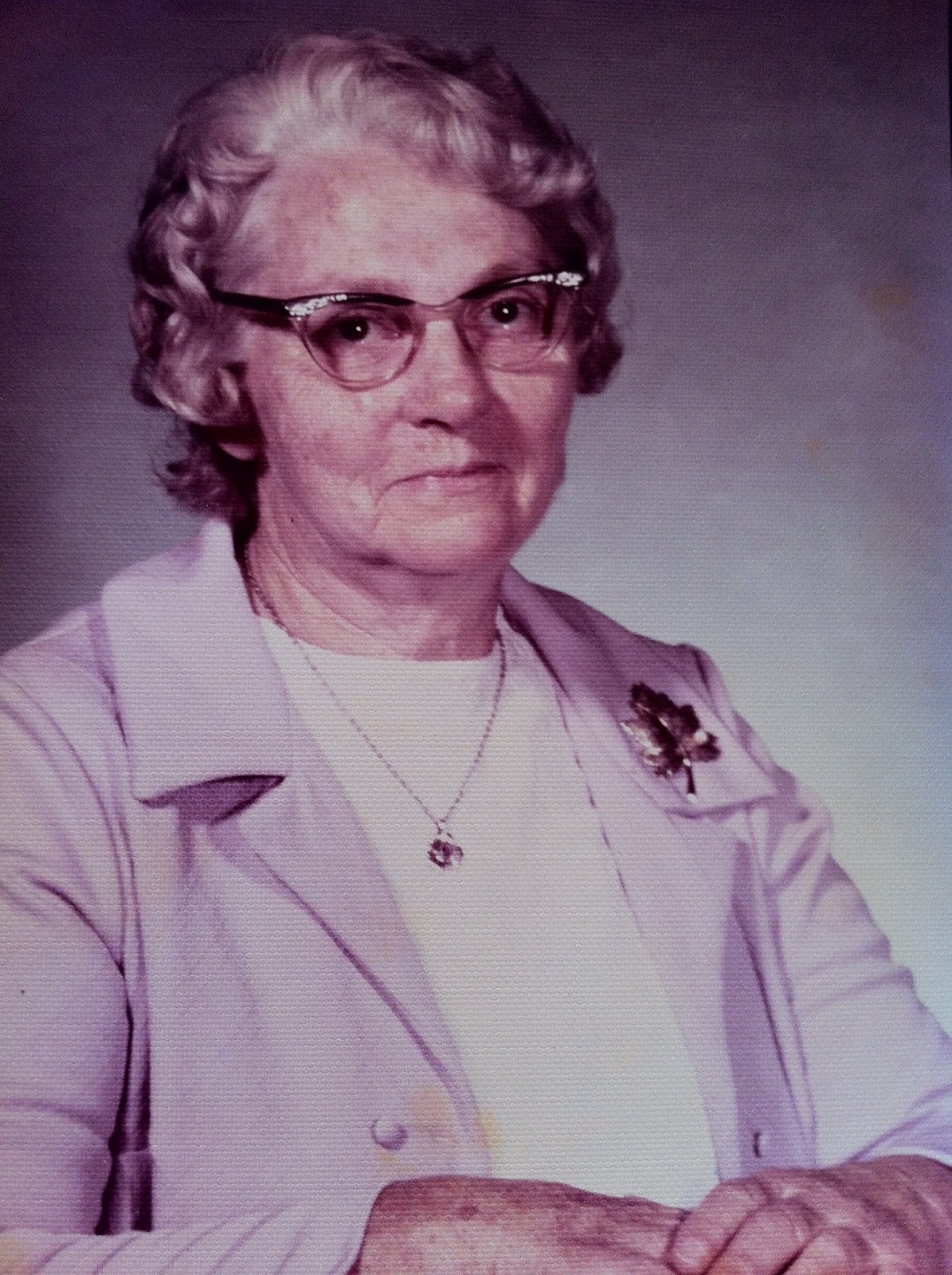
Lucia was my grandmother, who was born July 8, 1914 and passed away just last year at the age of 96, in November 2010. I have very few memories of her, but the ones I do have never fail to bring a smile to my face. I still remember the little blue corduroy purse with red embroidered flowers, that she gave me so long ago. I think I was probably 4 or 5 then. It’s funny how you can remember all the details of one moment from decades ago, and fail to remember yesterdays details. My parents divorced when I was very young, so I don’t have the memories that other family members have of her. She lived in Whitehall, Maryland and I can remember climbing trees and crouching on top of an old green doghouse, I think I still have the photo somewhere, packed away. I now live in Hawaii, and have many old pictures that I still need to scan to my laptop. Maybe one day soon I will drag them all out and go through them to see which ones I would like to add and share with you.


My great grandmother, Gincy Malinda Long used to scold me on the front porch of my grandma, Lucia’s home. I had a favorite teddy bear that I had carried with me forever- I used to clothe him and pretend I was changing his diaper. 😀 Well, I don’t think Malinda liked that too much because she kept telling me to put his diaper back on and to keep him clothed. That’s just too funny when I think about it now. I remember sitting in her lap at her birthday party and remember their being a trellis of red roses nearby. Always be thankful for what you have, a family to share it with, because tomorrow is never promised. 


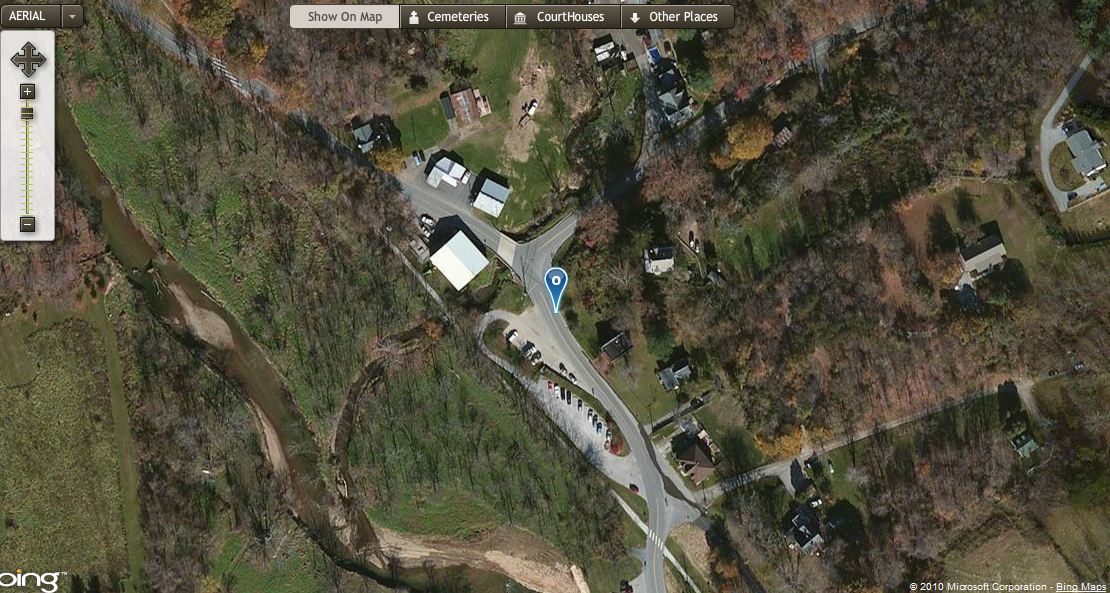
Below is an aerial map image of the general area where she resided before she passed away.

Courtesy of Bing Maps (2010)

Photo of Lucia Rose Cornett is from my own personal collection.