Posts Tagged ‘National Archives’

Nourishing Your Family Roots
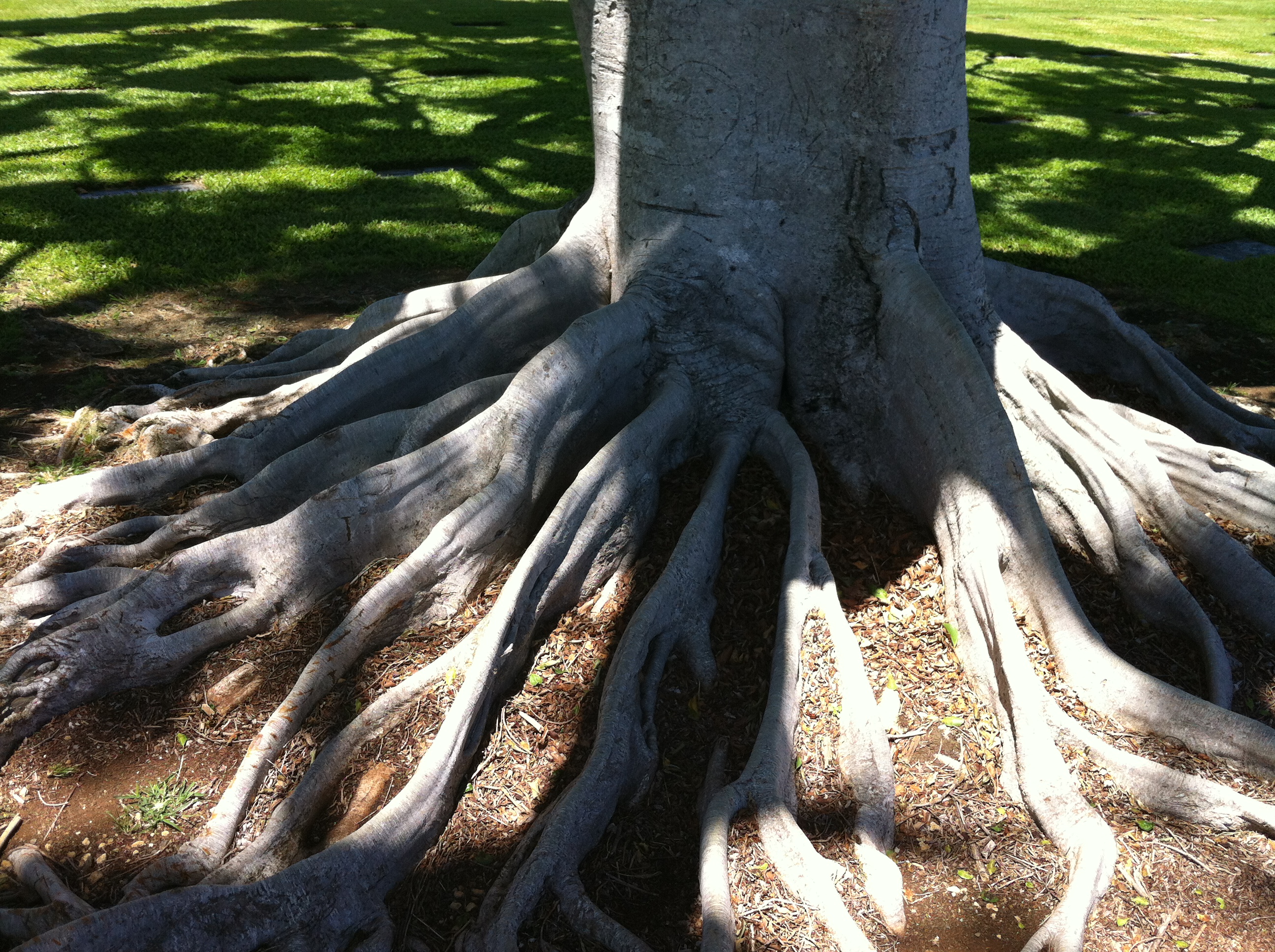
Photo Credit: Kelly Vial via kellyvial.wordpress.com

Are you a “newbie” to the subject of Genealogy? I have been doing my own genealogy research as a hobby for several years now and over the years I have acquired some knowledge from fellow researchers and what works and what doesn’t. I hope to share with you some of that knowledge and help get you on the right path to tracing your own ancestry. It’s time to nurture the roots of your tree!

Some of the Basics

1. Start from the very beginning; use what you know and then proceed into the unknown. Document all your facts as this will be your flesh and bone foundation. It will help your overall strategy and try to also document family traditions, memories and the like. It’s all relative! No pun intended 🙂

2. Take notes! Interview family members, writing down the date, who was interviewed and create a list of questions for them to answer. You can videotape each interview or you can buy a voice recorder for all your communications.

3. Next, you should definitely create a research plan! I won’t say it is mandatory, but it will help you stay more organized; you can enter all the data on the research plan that you know on any particular person in your tree. You should create a research plan for every generation or person and include fields such as: names, birth and death dates, places, and sources where you can probably find the information you don’t have. Don’t forget to cite the source information that you have found also! This is very important as you probably won’t remember where you seen the data last. It could have been NARA (National Archives), FamilySearch, Ancestry, etc.

4. Research logs are also important- keep it accurate and up to date. On a research log you can document what you have searched such as the ancestor’s name, type of record, the date of your search, trips to the library and what was found, online resources and any side notes. Keeping in mind to record your findings for each ancestor and your results is an important part of your research. You will want to note what era your ancestor lived in and so on. You can find sample research logs through Cyndislist.com to help you create your own. It’s important that your fields have enough space in which to write your information in. Small field boxes that are too small will cause you to cram what you can into these areas which in turn, may cause you some confusion.

5. Your research notes should be able to be read and understood by anyone and should also indicate the reason behind your search.

6. Filing Systems are a great way to keep you organized as well. You should order them alphabetically by surname, color coded, then create sub folders that have ancestors and the years searched. If you don’t want to go that far, you can always just file them alphabetically by surname so they are easier to locate in the future.

7. Stay organized and keep your files in order from the start of your search for your family roots. It will save you a ton of time having to go through hundreds of pieces of documentation, notes, logs, plans, calendars, deeds and BMD records that you have accumulated over time. There are many different types of documents that you will accumulate over any given period of time, so keep it organized or you will be forever hunting for it later!

Pinterest

Pinterest (Photo credit: KEXINO)

Historypin! What is it? It’s like a Pinterest for history and genealogy buffs! Instead of pinning pictures from various web pages, you pin channels instead. The channels hold everything you pin within that channel category. The channels you create can be customized however you like. It differs from Pinterest in a way that absolutely surpasses anything Pinterest has done so far. There is a tab at the top of the page entitled, “Maps”; I was curious to see what it did when I went to it, thinking it’s just a map of users who happen to use the site right? No way! Yes, it is a map but it’s so much more than that, it displays images and pins on that map that are clickable where you can see what someone has pinned and from what location it was pinned. Vintage photos from all over the world can be seen, you can upload video and audio content and you can even search by keyword if you are looking for anything in particular.

Historypin also has collections and tours that can be viewed or you can make your own. The collections, tours and photos are by museums, National Archives, Universities, and people from just about anywhere in the U.S. and abroad. The part I love most about this web page is the fact that Historypin is all about connecting people by the millions, who have a history that they want to share. Be it stories passed down from generation to generation, old photos of family or places, or archival objects such as antique photo albums that probably sat up in a dilapidated box, in a dusty, dirty attic with rats scurrying around up there. Yuck! It’s time to pull all your forgotten memoirs from your past ancestors, out of the attic and share their history with other genealogy buffs and professionals. We consider stuff like this to be an actual gold mine of sorts. A true treasure to behold.

What I wouldn’t give to walk into an old, abandoned house that my ancestors may have owned at one point, go up in the attic and see if anything was left behind! What would you do if you find something that they owned before you were even thought of? To imagine them holding it in their hands or using the item. It could be furniture, a cedar chest full of treasures of their day, a cameo, a family Bible, a daily journal or even an old, yellowed newspaper.

In conclusion, Historypin has a channel that gives these items in your attic a home. Not only can it be used as an educational tool, but it can be shared, learned from, seen by hundreds of thousands of people and build a more thorough understanding of the history of your ancestors or even someone else’s! What are you waiting for? Go check out these channels and pin some of your history! If you love Pinterest, you’ll love Historypin even more!

Do you have a web site or blog? Historypin has an embed tool where you can add your channels to a map on your site! Cool yeah?

Link: http://www.historypin.com/

I almost forgot! There’s a mobile app too! Historypin works on your Android, iPhone, and Windows phone 7 🙂

English: Storage hallway at the National Archi...

English: Storage hallway at the National Archives I building. This was taken with permission at the Wikipedia 10 Washington D.C. event. (Photo credit: Wikipedia)

What’s new in genealogy today? How about a free search engine called Mocavo, that is specially geared towards genealogists and other people that are interested in their families history? The Mocavo search engine enables the researcher to include more than 50 billion words, names, dates and places in the search bar. Mocavo fills this need by providing the first large-scale, free search engine for family history research. Can you imagine having your hands on all the free genealogy resources? All of the related results from industry sources such as genealogy message boards, family trees, state and local historical societies, the Library of Congress, National Archives, Ellis Island, Find A Grave, the Internet Archive, various U.S. state archives, and the thousands of genealogy sites that are built by individuals will be displayed on this site. This is so exciting! I can’t wait to see what this site has to offer.


When searching particular names, it is better to put quotation marks around the name as it yields better results, just an FYI in case you didn’t know. So lets see what kind of results I’ll be getting! 
Let me know how your search goes! Any success stories you could share would be great!


Have a blessed day!


Mocavo Home Page