Posts Tagged ‘Ancestor’

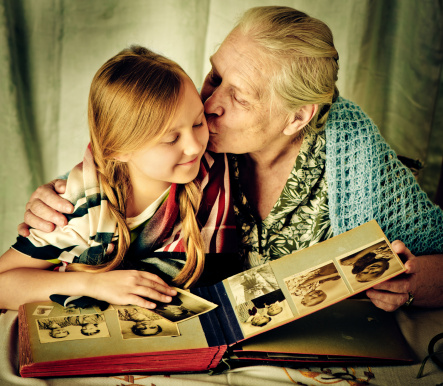
Title: Deep in Memories
Creative image #: 143176334
License type: Royalty-free
Photographer: Maria Pavlova
Collection: Vetta
Credit: Maria Pavlova

For several years, my interest in genealogy has escalated from being just a hobby to pass the time, into a full fledged passion to learn everything I could about my ancestors lives. Before becoming a city girl and moving to metro Atlanta, I was a barefoot country girl and where I lived if you wanted to have access to the internet, you had two choices, you could have dial up or dial up! There wasn’t any such thing as high speed internet, I’m sure there really was but not where I lived 🙂  So annoying, the wait time! If I were to wait for dial up to connect to the internet for everything that I do today, I would be lost! Who wants to wait for 30 minutes to check their email only to lose their connection and have to wait yet again and again?

Today, I am back in the city, I have my T3 internet bandwidth going full speed ahead! Normally T3 is mainly used by businesses for their high speed capabilities and they offer very fast, data transfer rates. I guess this girl got lucky didn’t she? Having T3 in my apartment, how could I not be ecstatic? Life in the fast lane as they say! So much to do and only so many hours in a day to do it in. 🙂

Everyone seems to be on social networks these days, your everyday person, non-profit organizations, businesses and so on. I for one, am on not just one social networking site, but several! You can find me on LinkedIn for business networking, Twitter for my genealogy interests and followers, Facebook to stay connected with my own family and friends and I love the fact that even though I am so far away from my family we are able to stay connected to one another by sharing our photos, videos and what we are currently doing with one another, so it almost feels like we just seen each other last week. Sort of!

Being so interested in my family history, I decided to create a Facebook page called “Fans Of Genealogy” which is  dedicated to my research findings and connecting with family members and others who are interested in this topic, in a totally different way than just having a Facebook profile for just myself. It’s a place where we can all share our family memories, stories that were passed down from one generation to the next and to share photos of our past ancestors. I am sure everyone has a story they would like to share, and for me, this is the best part of learning about my heritage. What social networking sites do you utilize for your family history research?

Have you created a fan page or group on your ancestors? It’s a great way to not only stay connected but to also document your research and what you found out about your family for your children and grandchildren. One day they might be interested in what you are doing in terms of genealogy and family history. They may one day want to know where they come from, what their ancestors looked like, or even read some of the stories that were passed down oh so many years ago!

It’s time to get crackin! Time to become the genealogy sleuth and discover my past! I’m going from life in the fast lane to life in the past lane!!

Happy Hunting 🙂

 

A Plumeria Gathering
Photo Credit: Kelly Vial 2012

I lost my motivation today to research family members, so I decided to write about some fun stuff for genealogists and family historians. I had to get away for the day, as I am sure most of you understand where I am coming from. Sometimes a girl just needs a break, if just to get away from it all and focus on the fun stuff! I’m not saying genealogy isn’t fun, but I just wanted to focus my energies on something a little different today.

There are so many ideas out there for the family historian, don’t you think it’s time to have a game night with your children? Dedicate one day a week, maybe even tonight, to a game night that focuses on your ancestry. You could create a word search puzzle with surnames or events that happened during that time in your ancestors life. Word searches aren’t your cup of tea? How about Ancestor Trivia? I always loved playing Trivial Pursuit with my family and learned so much and gave a lot of wrong answers to be honest. But it was fun! You could create question and answer cards in which each player has a turn asking a question about all the ancestors in your family tree. What better way than to get the children involved and maybe even spur their interest in their family’s history?

Maybe you and your family are more on the creative side, what can you think of that you could do in terms of your own family tree? You could create a collage, paint pictures, or create Christmas bulbs in which to include on your tree this year! Wouldn’t it be nice to include your ancestors of the past into your holiday celebrations? You and your children could paint a family members name and birth date on the ornament, add glitter, bows, or whatever you like to make that ornament special to that particular person. It’s a great way to get the whole family involved and they might even like it 🙂

Here are some other ideas you might like:

  • Scavenger Hunt
  • Create a Time Capsule (but in reverse)
  • Make Picture Magnets
  • Create a Tombstone Rubbing
  • Tour a Cemetery

Here are a couple of good sites I found that may give you some other ideas:

http://amberskyline.com/treasuremaps/

https://familysearch.org/learn/wiki/en/Family_History_Activities_for_Youth

http://simplekids.net/family-history-activities/

http://www.kidsturncentral.com/links/genealogylinks.htm


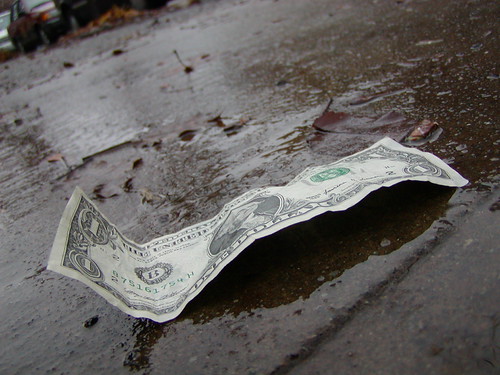
Dollar wet ground

Dollar wet ground (Photo credit: ceoln)

As I was catching up on some reading in the genealogy blogosphere, I came across an awesome article that was also a fun read. The In-Depth Genealogist blog site had an article that caught my attention and shed some light on the census records that we all use as genealogists, but just may have overlooked a certain part of the form. The article was titled, “Fun With Land and Property” by Michelle Goodrum.

In this article, she talks about the column with the dollar amounts listed under your ancestor’s real estate or personal property by utilizing an inflation calculator to determine what the value was, but in today’s dollar! I remember seeing this column on one of my own ancestors but didn’t give it much thought. Now I want to go back and check all my census records I have and use this inflation calculator to determine their wealth or lack there of. I never even thought to use this calculator but this could be of great use to the family historian and a wonderful tool.

What a great way to find out just a little bit more about your ancestry. It would give me better insight into how they lived, the value of their land, home, or personal belongings. Maybe they owned a farm, this would hopefully tell me what that property value was worth, say back in the year 1900. Comparing that value with today’s dollar amount, I could probably figure out more about their standing in the community, their lifestyle and even what their cost of living may have been during those times. It’s a wonderful approach to a side of genealogy research that I hadn’t previously thought of before. But in regards to their economic standing and the value of our dollar today, given our economic recession, I would have to take that into consideration as well. Here is the link to the article I read: http://www.theindepthgenealogist.com/?p=2158

Below are a couple of links to different inflation calculators where you can try the one you like best. Compare it to your census records and find out all you can about your ancestors! This is just the tip of the iceberg! Maybe now we can figure out what those numbers really mean!!

http://www.westegg.com/inflation/

http://www.davemanuel.com/inflation-calculator.php

http://www.measuringworth.com/uscompare/

Nourishing Your Family Roots
Photo Credit: Kelly Vial via kellyvial.wordpress.com

Are you a “newbie” to the subject of Genealogy? I have been doing my own genealogy research as a hobby for several years now and over the years I have acquired some knowledge from fellow researchers and what works and what doesn’t. I hope to share with you some of that knowledge and help get you on the right path to tracing your own ancestry. It’s time to nurture the roots of your tree!

Some of the Basics

1. Start from the very beginning; use what you know and then proceed into the unknown. Document all your facts as this will be your flesh and bone foundation. It will help your overall strategy and try to also document family traditions, memories and the like. It’s all relative! No pun intended 🙂

2. Take notes! Interview family members, writing down the date, who was interviewed and create a list of questions for them to answer. You can videotape each interview or you can buy a voice recorder for all your communications.

3. Next, you should definitely create a research plan! I won’t say it is mandatory, but it will help you stay more organized; you can enter all the data on the research plan that you know on any particular person in your tree. You should create a research plan for every generation or person and include fields such as: names, birth and death dates, places, and sources where you can probably find the information you don’t have. Don’t forget to cite the source information that you have found also! This is very important as you probably won’t remember where you seen the data last. It could have been NARA (National Archives), FamilySearch, Ancestry, etc.

4. Research logs are also important- keep it accurate and up to date. On a research log you can document what you have searched such as the ancestor’s name, type of record, the date of your search, trips to the library and what was found, online resources and any side notes. Keeping in mind to record your findings for each ancestor and your results is an important part of your research. You will want to note what era your ancestor lived in and so on. You can find sample research logs through Cyndislist.com to help you create your own. It’s important that your fields have enough space in which to write your information in. Small field boxes that are too small will cause you to cram what you can into these areas which in turn, may cause you some confusion.

5. Your research notes should be able to be read and understood by anyone and should also indicate the reason behind your search.

6. Filing Systems are a great way to keep you organized as well. You should order them alphabetically by surname, color coded, then create sub folders that have ancestors and the years searched. If you don’t want to go that far, you can always just file them alphabetically by surname so they are easier to locate in the future.

7. Stay organized and keep your files in order from the start of your search for your family roots. It will save you a ton of time having to go through hundreds of pieces of documentation, notes, logs, plans, calendars, deeds and BMD records that you have accumulated over time. There are many different types of documents that you will accumulate over any given period of time, so keep it organized or you will be forever hunting for it later!

detective

detective (Photo credit: olarte.ollie)

If you like mysteries, then you are probably a good genealogy detective. Just like police detectives or investigators, genealogists and family historians alike must find the clues in their research to be able to move forward with what they have found. When sorting through my different documents and research findings, I admit I am guilty of just jumping the gun and “Googling” to my hearts content. In truth, there is nothing wrong with using search engines to find something, ANYTHING on your ancestors. But it probably won’t yield the results you are seeking. You may have reworded your keyword search several times over, but the search engines still give you the same web pages, with a little variation thrown into the mix. In cases like this, maybe it’s time for a different direction as far as your research is concerned. What do you do next?

Have you thought about creating a research plan? I have many different times, but have yet to put this into action. After listening to a genealogy webinar hosted by Legacy Family Tree, I have decided to change my research tactics! I have completed research on this topic but just now, think it’s time to share what I have learned. You may ask, “What is a research plan anyway? Why should I use one?” A research plan is the backbone of a genealogists research. It will help you find out what you do and do not know about your ancestors and may also help you break through that brick wall you have found yourself up against. You need a plan of action; this is the purpose of the research plan!

Well, for starters, creating a plan such as this can be critical to your research. Would you go into a library unprepared? Looking around for a book that just may look interesting enough to check out, is just a waste of your time. Go in there prepared and knowledgeable as to what you are seeking. How do you gather your information? Personally, I start with what I know. Right now I am in the process of creating my own research plan form using Excel software. The forms I have seen on the different web pages, I don’t really care for. The field boxes are too small to write the data inside without making a mistake reading it in the future. I want to be able to recall my sources, dates, the type of research that was completed and so on. So I am creating my own! Too much work? Not at all. It will keep me organized and I can always refer back to the plan.

There are many different sites where you can download free forms such as a family group sheet, a research log, pedigree charts, or a research plan; whatever form you think may help you in your overall research, forms are a great resource tool to get acclimated to using on a regular basis. I like http://www.cyndislist.com/free-stuff/printable-charts-and-forms/ personally. This site has direct URL’s that take you to the right form based on your own needs without having to waste time searching for the right one.

If you are like me, you do a lot of online research. I live over 4000 miles away from where my ancestors were known to have settled, so I depend mainly on the Internet for my findings. I have gone to my nearby library but have only walked out with genealogy books and a book that will help me learn the Japanese language. There wasn’t very many research books related to my family search, mainly Hawaiian heritage and the like. They did have huge filing cabinets of old newspapers which I thought was interesting, but doesn’t help me find my Cornett family roots. So I am pretty thankful to have internet access!

Keep in mind that if you are searching through internet search engines, that Google, Bing, Mocavo and others, will yield a variety of differing results. Not all search engines will be the same or give you the same results. Experiment with different search engines and compare the results! Just an idea 🙂

There is quite a bit of data accessible online and it can be overwhelming to a beginning genealogist. One of the sites I go to regularly is https://familysearch.org/. They are always updating the site with new records and documents, so I go there to see what may be new to my own searches on my ancestry. Thank you to the volunteers for adding and helping make these documents available for viewing! Since using a research plan involves thoughtful planning, I hope my plan works for me as well as I think it will.

If you decide to create your own research plan, ask yourself a few questions.

1. What do I already know about my ancestor? Write it down.

2. Can I narrow down the search in any way? Maybe it’s a death date or burial location.

3. Did a family member move away during a specific time frame?

4. Did my ancestor die in one place but happen to be buried in another location or state altogether?

TOOLS

Ancestry’s Wiki or Red Book

Family History Library Catalog

Local history books of the area you are researching

Manuscript Searches

Literature Research

Heritage Quest Online

Search old newspapers

Family Search Wiki

I can’t wait to get started on this new method style of researching my ancestry. Good luck!


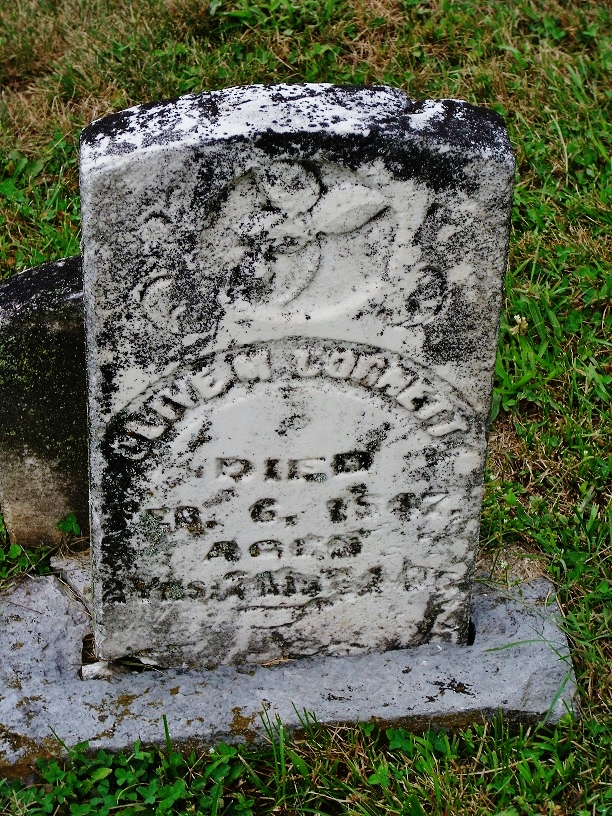
Olive Melvine Cornett is today’s “Wednesday’s Child”. Olive Melvine was my 3rd great grand aunt through my 4th great grandparents, David Cornett and Phebe “Feby” Sutherland. Olive was only 2 years of age when she died. Olive was born on June 12, 1844 and died February 6, 1847. She is buried at Central Cemetery in Flat Ridge, Grayson County, Virginia.

I wish I knew the cause of her death but that’s for another post entirely! Wish me luck as I research her in more depth. Hoping to find something on her, but since she died so young, there is a probability that I won’t find anything at all. Keeping it positive!

Timeline of Events Which Took Place in Olive Melvine Cornett’s Birth Year (1844)

Charles Dickens published a short story called “The Chimes”.

In 1844, Harriet Tubman married John Tubman, who was a free African American, while she could still be sold and separated from her husband.

Our 11th President was elected, James K. Polk, in November 1844


Olive Melvine Cornett (June 12, 1844- February 6, 1847)
Buried at Central Cemetery in Flat Ridge, VA
**Photo Credit: Clinton G.

Gum tree & footpath to Baldwin

Gum tree & footpath to Baldwin (Photo credit: Ben.Millett)

Why do I write a genealogy blog of all topics in which I could choose from so many other topic choices? I could be writing about some of my favorite hobbies like cooking or photography, but I chose genealogy. Always interested in learning new things, why not learn more about the family I never really had the chance to know? This was a perfect choice for me! I feel that writing this blog about my family, in turn, allows me to connect with the members of my family in a way I can’t describe altogether. After all, I am researching dead people! I love every moment and breakthrough I get. I have written many different articles on different family members, and in my lifetime I will never ever finish my research. There are way too many people to do look-ups on in my family tree for me or any other family historian to ever be truly complete. There is so much history in our Cornett family and I’m only just getting started really.


Since researching, I have found many great genealogy blogs out there in the internet world. Made some great contacts along the way too. Who knew they were my cousins? I sure didn’t when I started! Being on the topic of other genealogy blogs, there are many that are abandoned and dead to the rest of us historians. They may have started out with a great purpose in mind, but they are just taking up space. Nothing is updated. The links are bad and go nowhere! What about the citation of those resources? Umm yeah…non existent! That’s not a good thing and it definitely isn’t what I have in mind for my blog. I intend to keep it going as long as I am able to do so. I consider it my baby, being my very first blog I had ever thought to keep updated, it’s almost like my own personal family journal. Writing the stories of my ancestors is my main goal. Not to make money, but to keep their memory alive through words, photographs, and documents I find.


Tuesday’s Tip: Don’t get discouraged! Stay on track with your research. When you least expect it, your research will benefit from all of your hard work and you may find the information you have been seeking. Keep looking! The documentation is just playing a little game of hide and seek, just waiting for you to discover it and bring it back to life.


Image Source:
DAR Logo

DAR- Daughters of the American Revolution is a free resource for genealogists and offers aid in their research. The (GRS) Genealogical Research System is a collection of databases, which provides access to the many materials that have been collected over time. The DAR was founded in 1890, the members are passionate about their research findings and are committed to preservation of the history of our ancestors.


This genealogical resource has many volunteers who have scanned and indexed years worth of documents and other materials which can be found in the online database. There is a drawback to sharing this information with others, because of proprietary information and data, and under no circumstances may it be shared or published.


If you are like me, an amateur genealogist, or you may even be a genealogy expert, the DAR could be a stepping stone to finding your ancestral ties that you may have been seeking for so long. It is definitely worth a try, don’t you think? Maybe we can knock down some of these brick walls we have encountered and find some really valuable documents that will only further our research and prove who we are and where we come from. It’s not just about where you, your parents or grandparents were born and the dates of birth, or even how many children they may have had. To me, and this is my own personal opinion on the matter, genealogy research is about finding out more about who my family really was, what they looked like, their way of life, the career choices they may have made and so many other points of their lives and the direction that those points have taken them over the years. 


I recently received an email from a family member, who as it turns out, was researching the same family surnames that I was. Imagine not knowing that you had a family member and didn’t even realize that they were family until you connected through a genealogy resource! Anyhow, back to the email! She has been verified by the DAR and is in the process of getting it signed by officials in Washington D.C. So I can’t wait to find out if she was successful in finding the data she needs to prove her lineage and connection to James Canute Cornett! 


I am definitely going to be researching this DAR to gain a more in-depth understanding. So you may see future postings related to the Daughters of the American Revolution. Who knows, maybe I will also find information on some of my Sutherland and Canute ancestors.


Good luck in your research!


research

research (Photo credit: suttonhoo)

When researching surnames in your family ancestry, here is some good advice.


(1) Get documentation beginning with your parents and work your way backwards. Be absolutely sure of the first three generations, which are easily documented, before going back farther.

(2) Treat all siblings equally, along with their spouses. Don’t just gather information about your direct ancestors.

(3) Get accurate locations for every event in their lives, including township, county, state or province, etc. and always give that information when posting queries.

(4) Find every possible family member in every possible census and make a timeline showing where they lived and when.

(5) Post a query to any forum or board giving full names, dates and locations for each generation, including all siblings and their spouses. This will help out in the long run, so researchers or volunteers know what to search for.

(6) Use any information found online or posted in response to your query as a *clue* and always go back to primary sources. Don’t believe everything you see online. Never add unsourced information (online family trees are NOT sources) to your database until you have sourced the info.


Surname Database ~ Search For Yours Today!


Hoping everyone has a safe and Happy 4th of July!

Ancestry.co.uk has made the company’s National Probate Calendar, 1861-1941, completely free to everyone until July 8th. You can search the index records to see where and when your ancestors died, see the original records to discover how much money or property they may have left behind, and you can use the information that you found, to order their wills and probate records from the Principal Probate Registry. (Eastman’s Online Genealogy Newsletter)


Wills and probate records are much more than a list of possessions that one of your ancestors may have left behind when they died; it can provide you with information on their social standing and wealth, if any, that they may have had. You can find out what they liked or kept as a family heirloom or even give you a head start to finding another ancestor that may have been listed in the will. How great is that? It’s free for a limited time, so take advantage of it! I love FREE stuff for genealogists! 

Image Source


Another collection that will help you discover lost riches in your family tree is Andrews Newspaper Index Cards, 1790-1976. This unique card index was compiled in England from the 1790s until about 1970 and features a collection of notices from newspapers and various official sources, such as the London Gazette. Approximately 250,000 cards include announcements of births, marriages, obituaries, and deaths abroad; notices of wills, unclaimed estates, and filings under the Colonial Probates Act of 1892 (which recognized probates from courts in British possessions); and advertisements for missing persons and people seeking next of kin. The original newspaper clippings on the cards sometimes include annotations referring to additional information from other sources. (Ancestry.co.uk)


Rizinus-Blatt

Rizinus-Blatt (Photo credit: flöschen)

So you have been searching your ancestry and getting your family tree in order. You have names. You have dates. So you might be thinking, these are just a bunch of names, birth dates, and that’s about the gist of it. Well, think again. 

When I was younger, I used to think of genealogy as a pretty boring topic and it kind of ran neck and neck with ancient history. Blah blah…boring! But now that I’ve grown up, had children of my own, I want to know who my family was and where they came from. Now, I have become so thoroughly involved in the research behind it, that it’s become more personal to me. Not just a pet project, but something much more. It’s almost like an addiction; I just can’t get enough! As the title of this blog states, it’s definitely more than just names and dates! They were real people living real lives.

By focusing on just one person on the branch of my tree, it’s almost as if I am trying to know that person on a more personal level. I am trying to learn who this person really was, not just by name but by their lifestyles too. What were they like? Would I like them even if they weren’t a member of my family? What did they do for a living and how did they survive in times of famine and war?

Before the Internet even came into everyone’s homes, it was much harder to do research on our ancestors. Today, in this digital age, we are able to send information all over the world in just minutes. There are literally hundreds of web sites on genealogy to help us in our searches. Some require membership fees, yet others do not. We don’t have to leave our homes to request copies of birth certificates or look at census records, as we can do this online through our computers. Even though the internet is a great resource tool to use, we can still use the older methods of actually talking to our elders, other family members to get this information. We don’t have to rely on just the internet and a few key phrases to get the results we are looking for, but it does help. 

Another idea for you to consider, would be to obtain a copy of an ancestors birth certificate. All you need is the name of said person, their parents name and the date of birth; it shouldn’t be an act of Congress to get this information. Just contact the counties Vital Records and Statistics office. Also, you could join a genealogical society in the state where your family has originated from. This may help you and keep your headaches to a minimum!