Posts Tagged ‘Document’

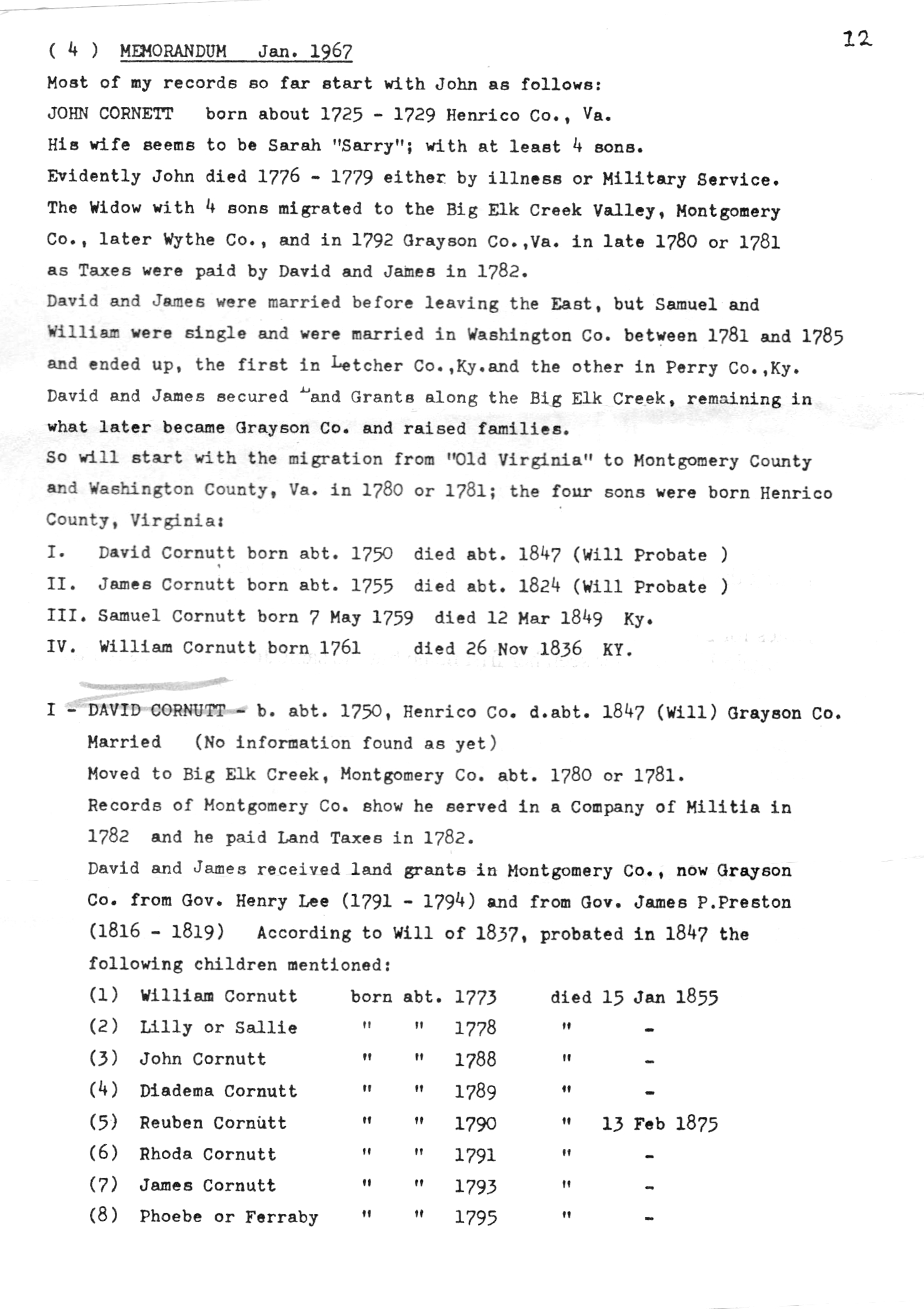
Memorandum (Ashe County, NC Public Library)
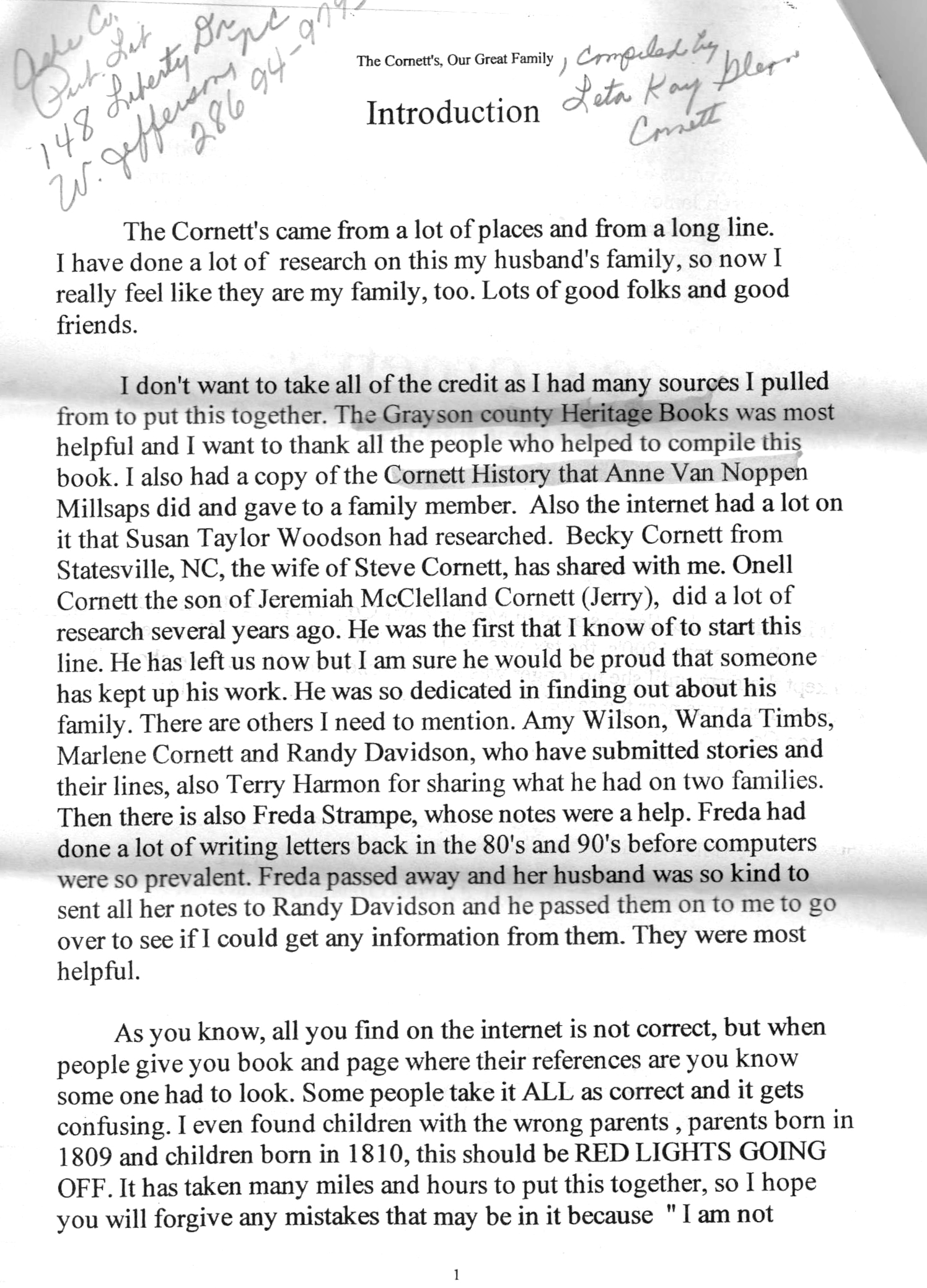
Copy taken from a book titled, “The Cornett’s, Our Great Family” Introduction Page
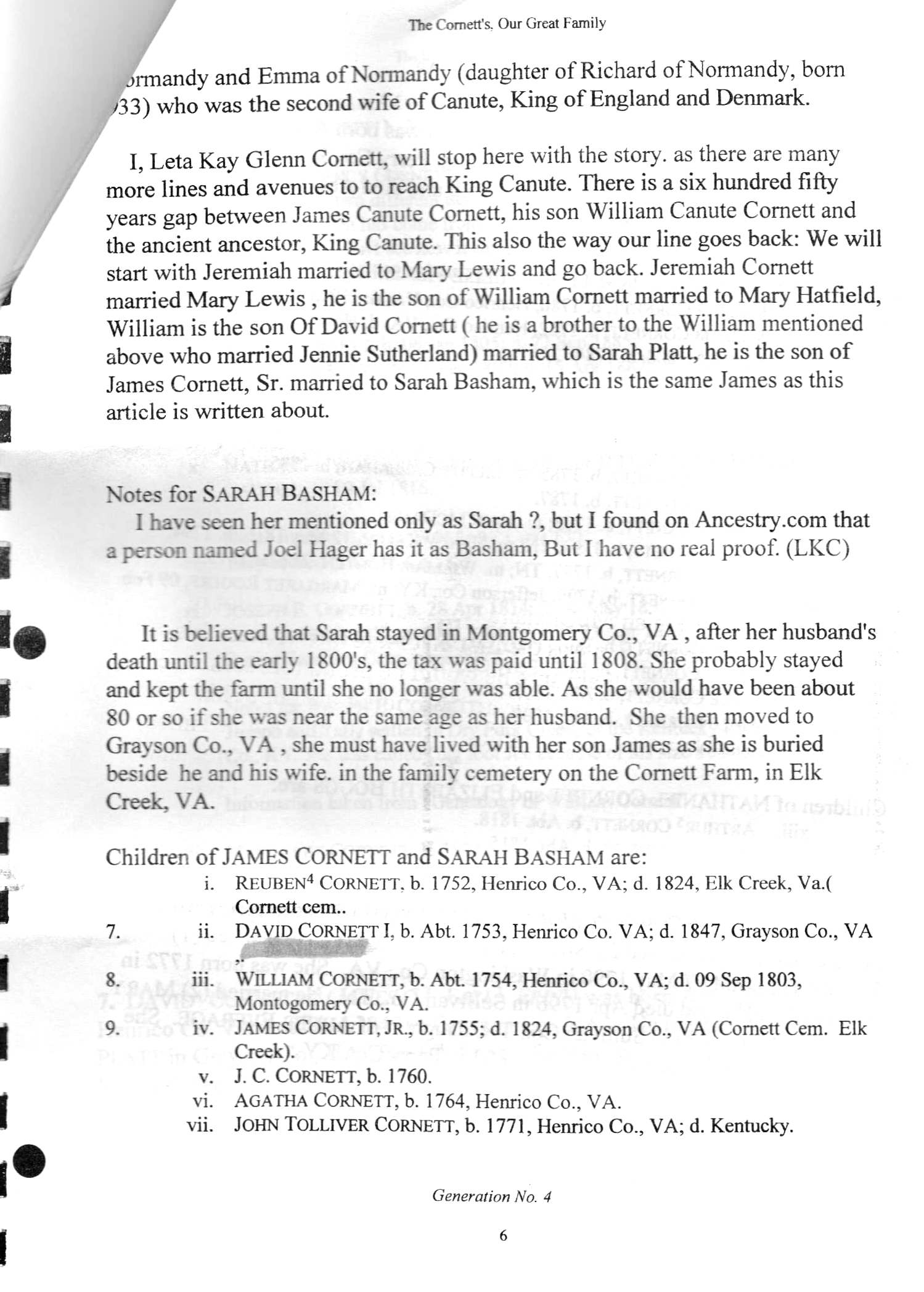
Cornett Information From Ashe Co.,North Carolina Public Library (page 6)
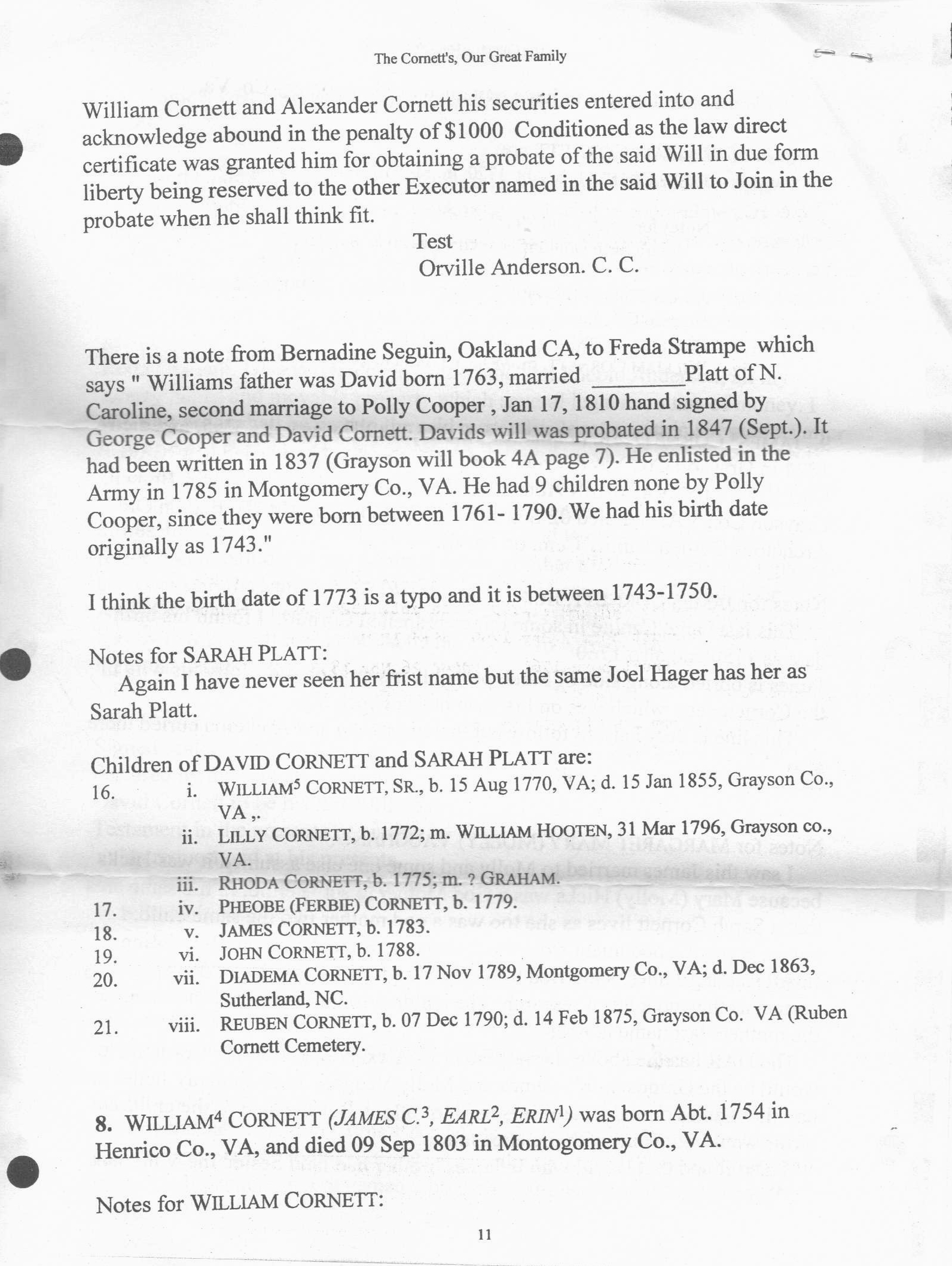
Cornett Information from Ashe County, North Carolina Public Library (page 11)
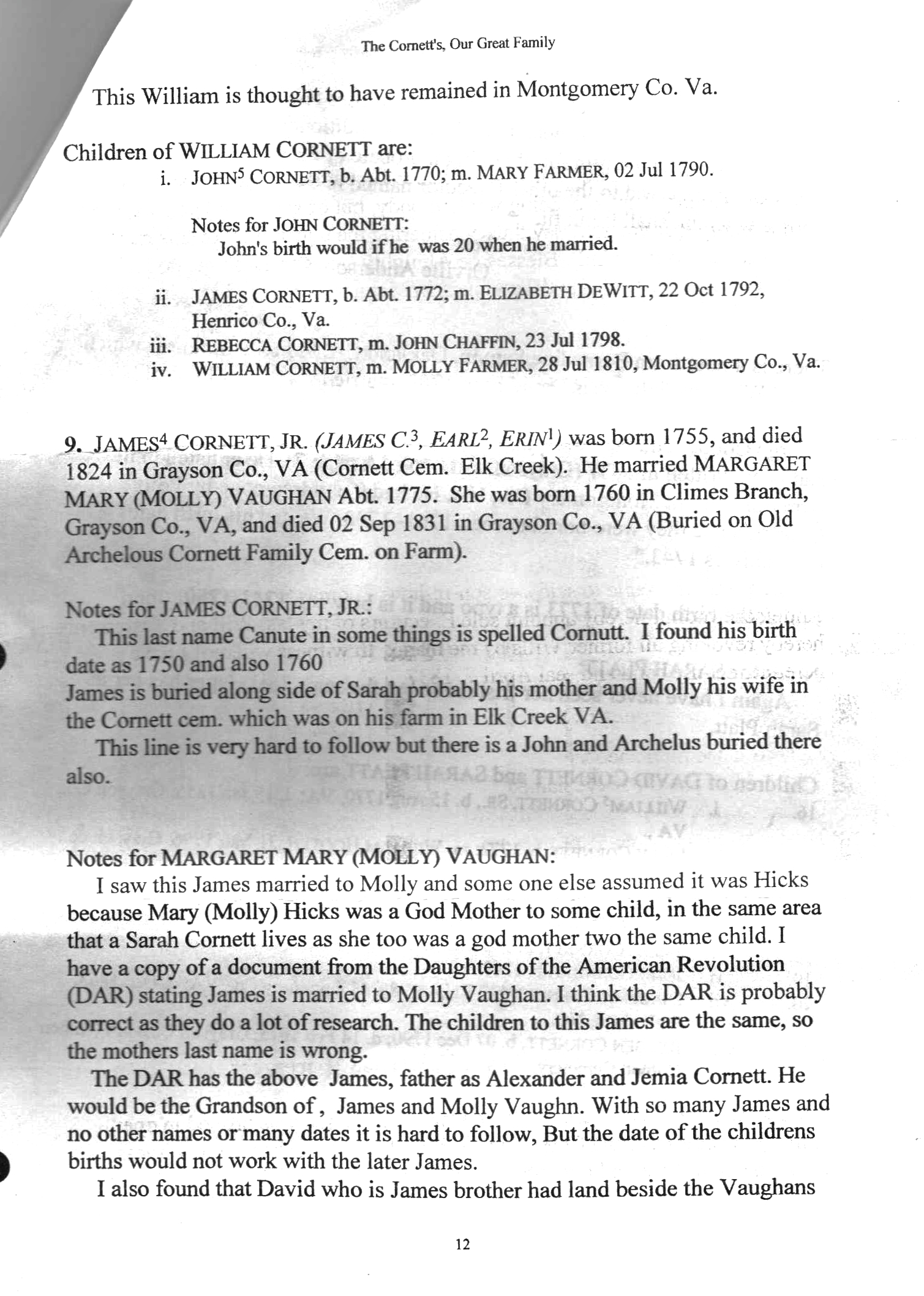
Cornett Information from Ashe Co., Pub Lib, NC (pg. 12)

These documents were copied by the Ashe County, North Carolina Public Library.  I received these pages in an email from a fellow researcher who I am currently working with, among others and out of respect for her privacy, her name is not mentioned here.  Interspersed on these pages is information regarding James Cornett(Cornutt) and Sarah Basham, who were the parents of both David and James Cornett Jr.

David’s Will is among those documents mentioned and includes information about Margaret Mary (Molly) Vaughan.  The person who compiled all of this information was Leta Kay Glenn Cornett. Whether it was a document or book, I’m not entirely sure. The document/book is entitled, “THE CORNETT’S, OUR GREAT FAMILY“. I can imagine that this “book” is no longer in print as I haven’t been able to locate a copy as yet. I would love to read it in its’ entirety as I only have selected pages and they are random at best!

There is also a copy of a document from the DAR stating that James Cornett(Cornutt) was married to Molly Vaughan.  The MEMORANDUM, dated January 1967, beginning with John Cornett of Henrico County, Virginia. Information regarding David, listing his military record and that he and James both received grants in Montgomery Co., from Governor Henry Lee and James P. Preston, and also including a listing of his children.

So what have you been researching this week?

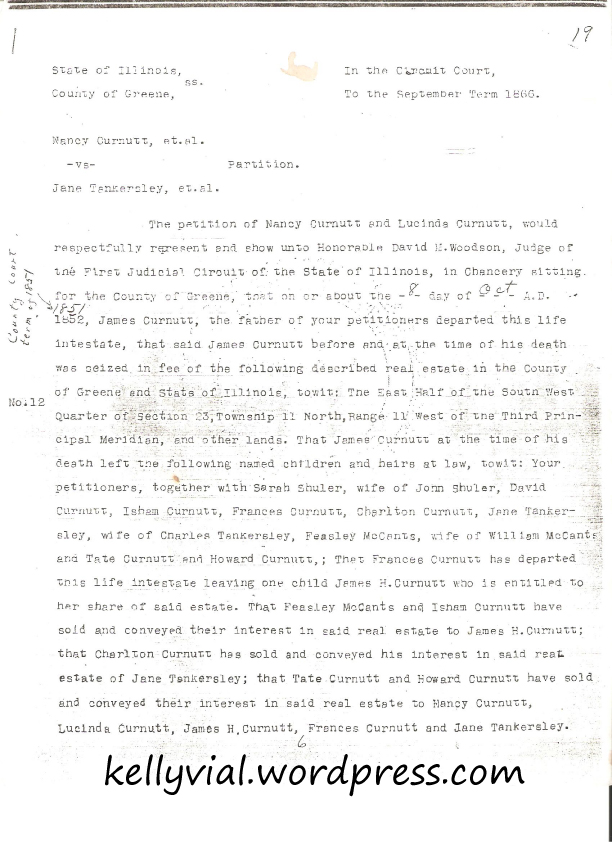
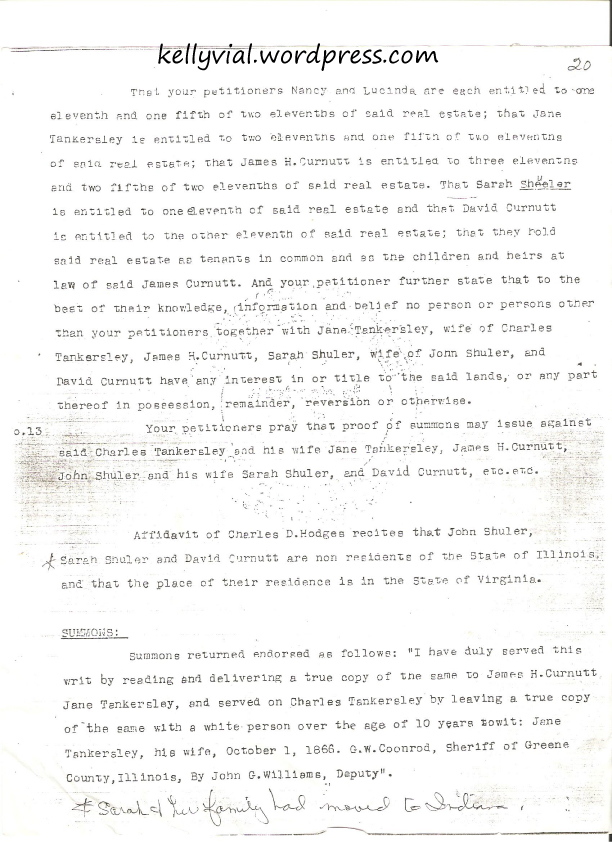
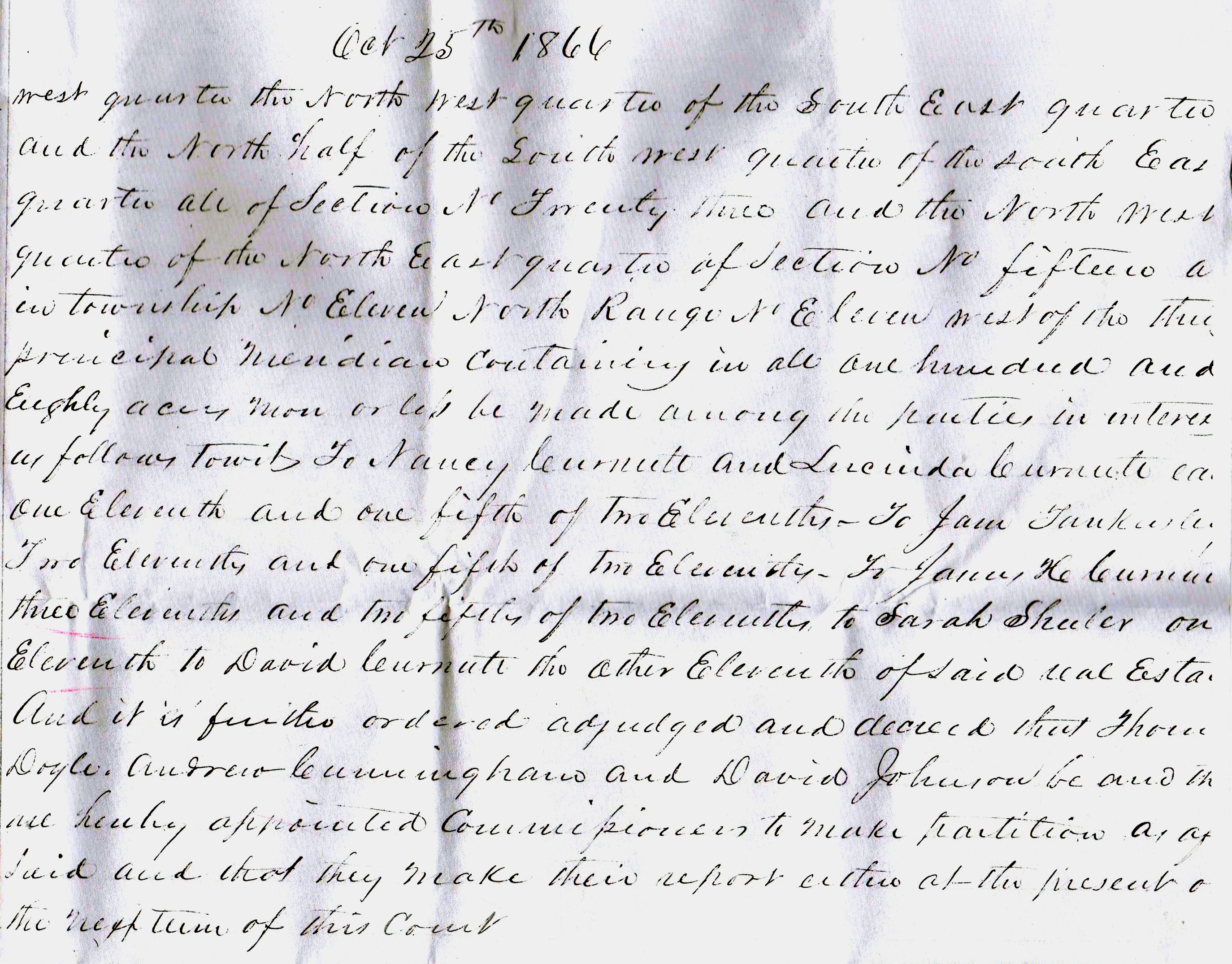
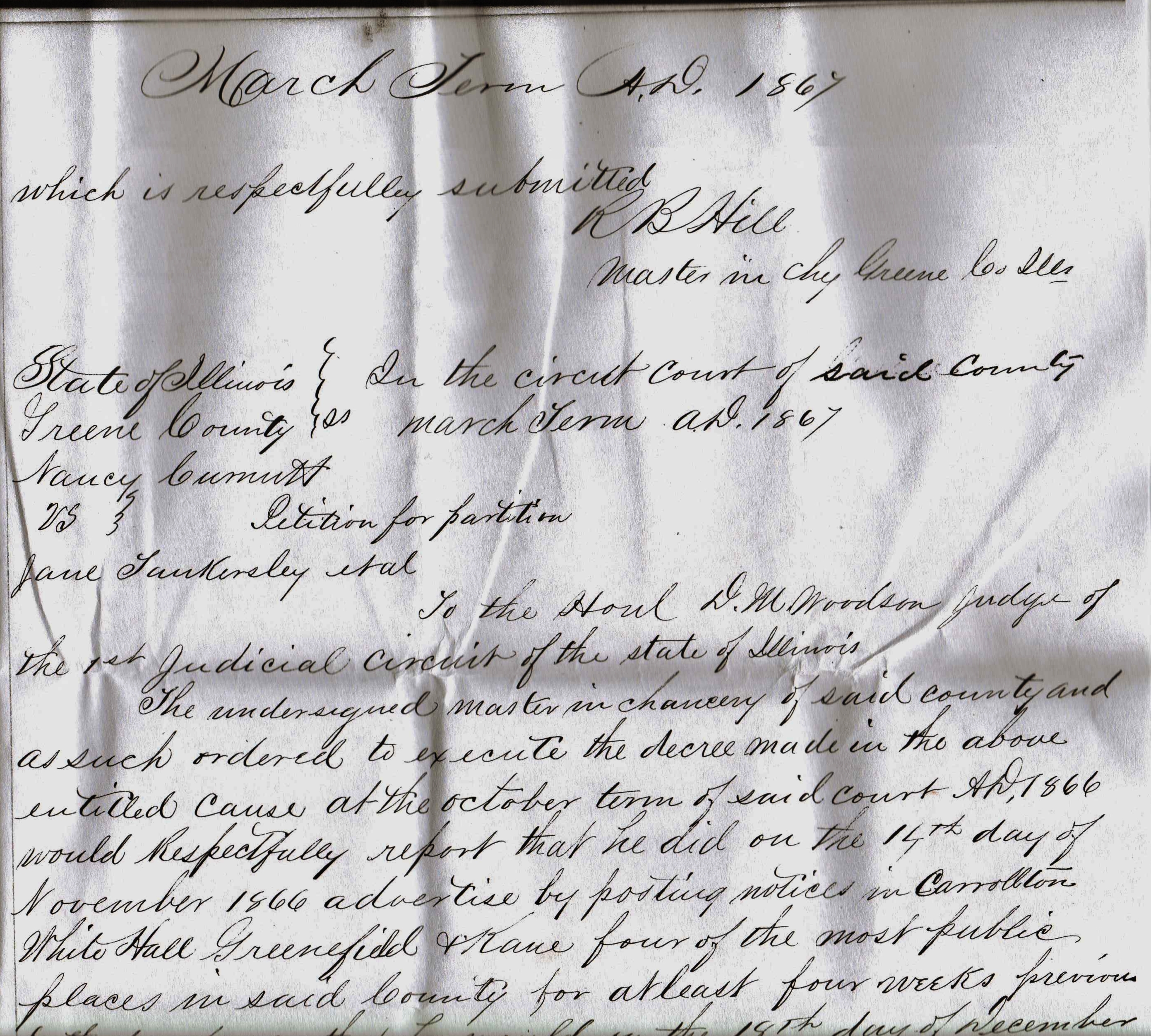
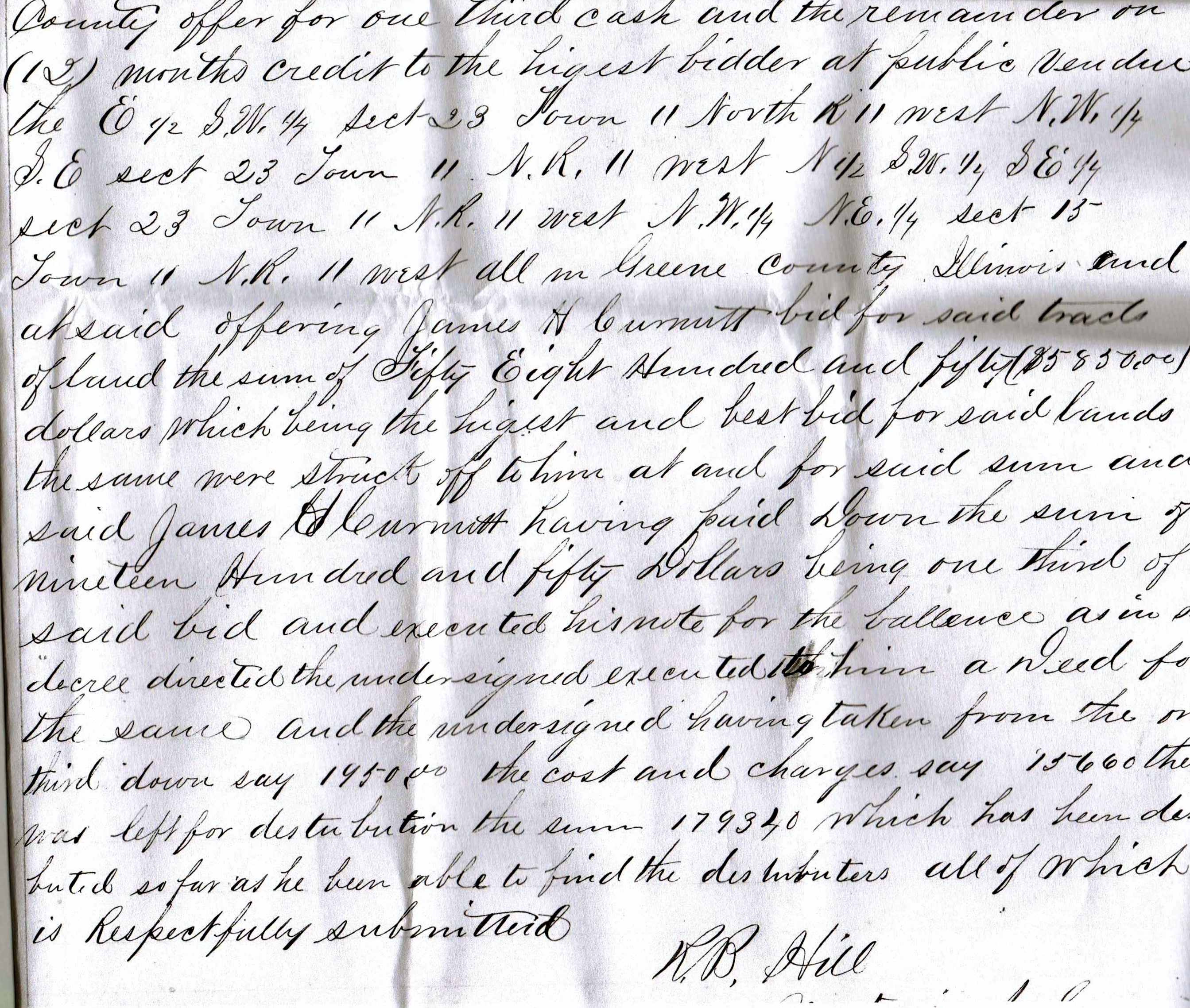
In a previous post, I talked about my ongoing search for a “Partition” that would prove the parental lineage of David “Blue” Cornett. The Partition results were recently found thanks to a fellow researcher working with me and several other Cornett cousins to find this document. It took a multitude of emails, getting into contact with the right people and speaking with others that could look up this document and the results based on the data we had already.

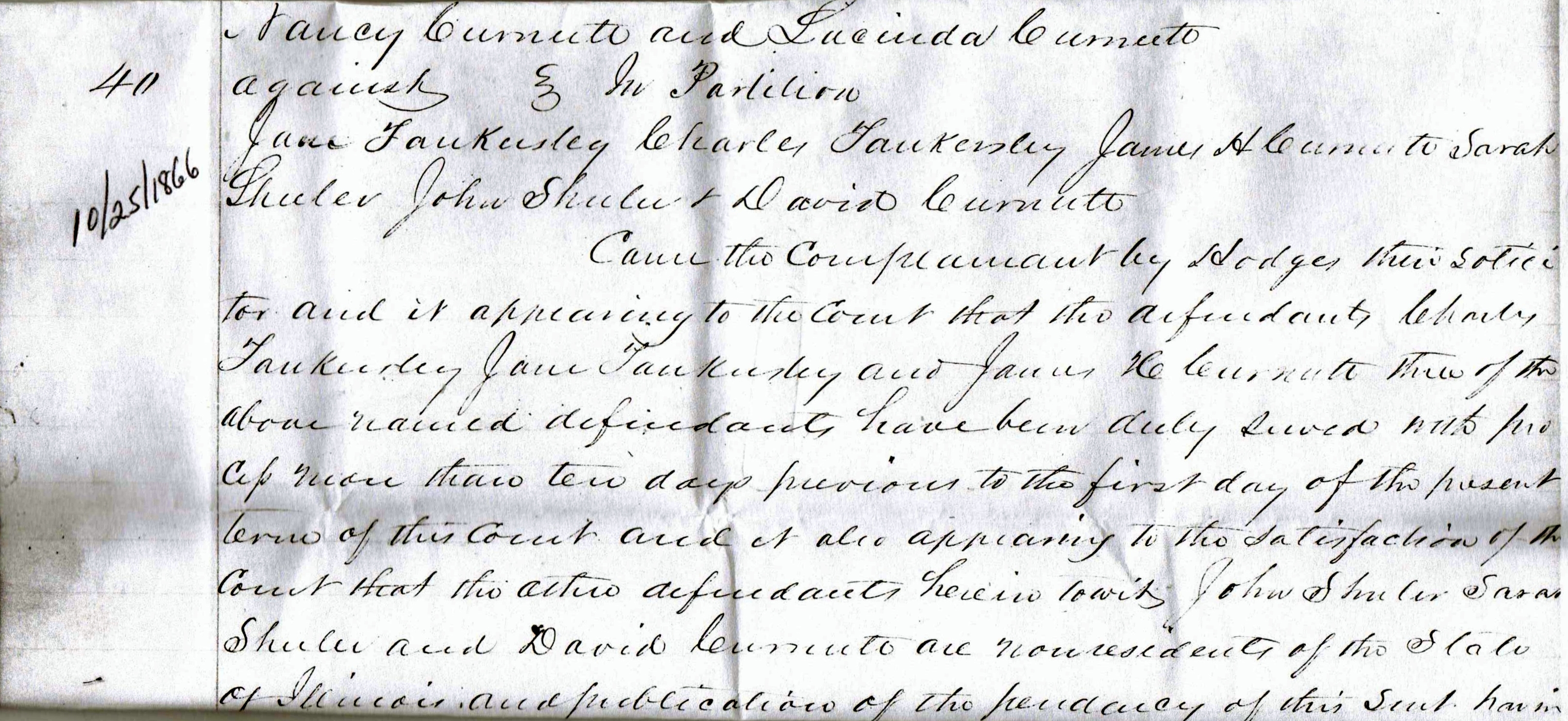
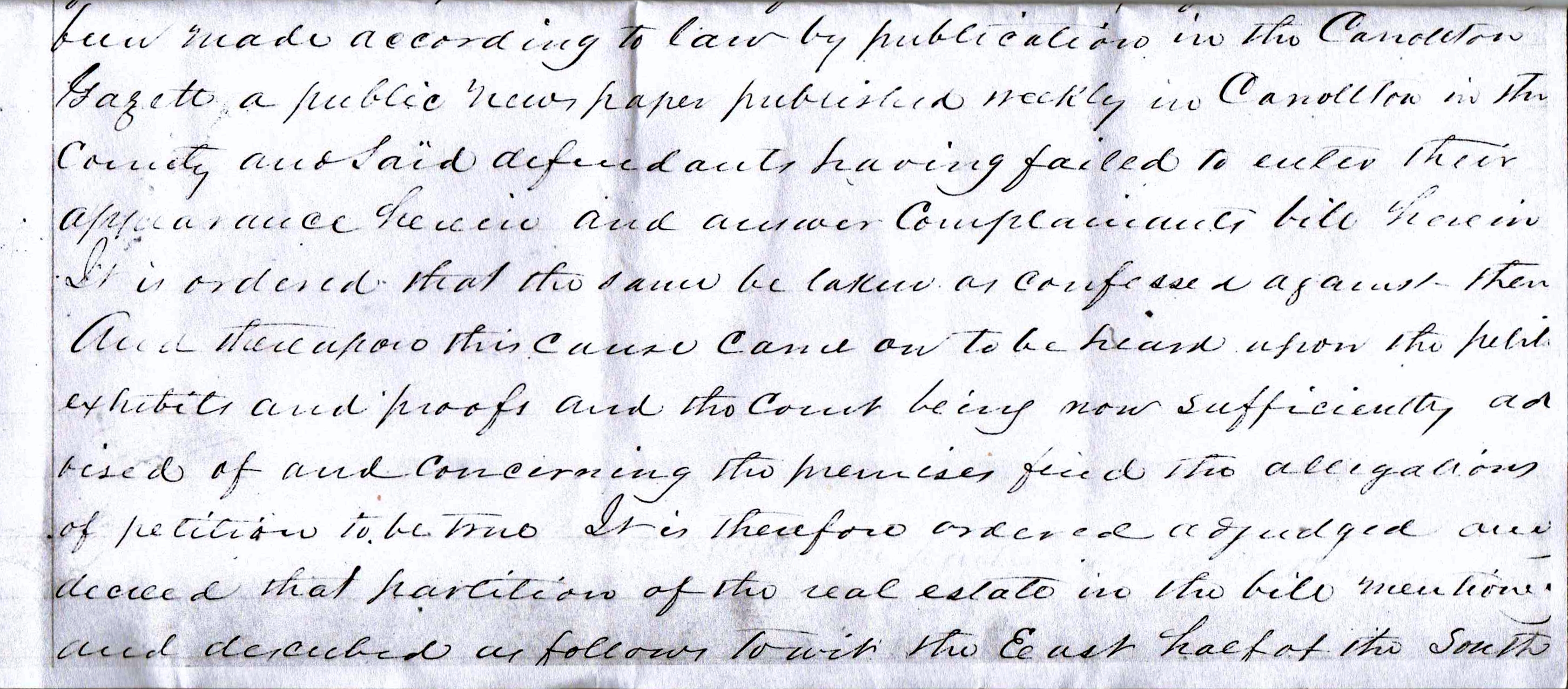
I am currently in the process of transcribing the document, as it was handwritten in a flowing script where some of the words are hard to decipher, not because it was sloppily written because it was actually a beautiful text, and dated October 25, 1866. I was so excited to get this, that I wanted to share the findings! I should probably get on the ball and start transcribing it so I can post that, if needed.

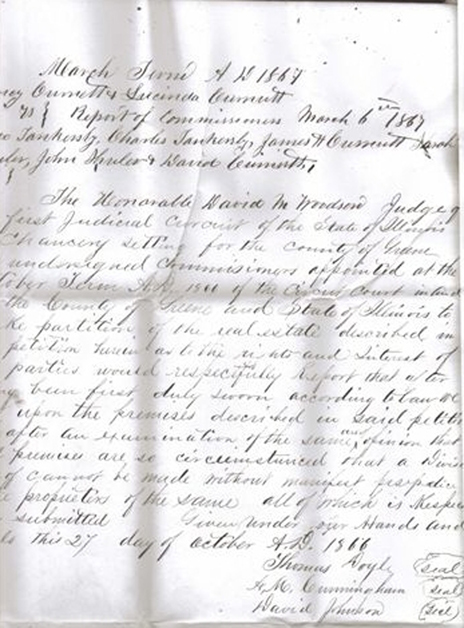
As I read both sets of documents, I noticed that it states the residence of David Curnutt as being non- residents of the state of Illinois; but also states that he was a resident of Illinois as was John and Sarah Shuler, in the final judgement papers. (shown below the actual Partition document) This must either be an error or David didn’t live there for very long as David Cornutt was on the U.S. Federal Census records for both 1860 and 1870.

In regards to John H. Cornutt, he must have been a very wealthy man to be able to afford to pay $5950.00 for this land tract back in the mid 1860’s; today the value of said land would most likely be worth several hundred thousand dollars! John Cornutt financed part of the payment but who in those days had $1950 to put forth as a down payment. That was a  lot of money back in those days. It’s still a lot of money today and hard to come by at times. So can you just imagine how hard it would have been to save that kind of money? Maybe he sold cattle? Or maybe he was just a prosperous citizen. We may never know all the little details.. but at least we have these documents to tell even part of the history behind the Partition and what the Judge’s final decision was.

Let me know what you think!

(Partition Page 1)


(Partition Page 2)

Below is the document which shows the judge’s final decision on the land that is to be divided among the family members mentioned in the document and distributed accordingly.

1-1

1-2

1-3

1-4


1-5

1-6

Continuing on with the mini-course (Family History Quick Start), in lesson 6, I learned that some programs aren’t   the best for creating a family tree, such as Word Perfect. If you remember Word Perfect, you may recall that Microsoft Word couldn’t open Word Perfect files, and if you had a disc with a document created with the program you didn’t have, you were out of luck trying to read the document. How frustrating was that? The best program I think works for me the most is Microsoft Word and Adobe Acrobat, because I can create multiple word documents and import them into Acrobat to make one PDF file. The PDF will preserve pictures, formatting and the text. You don’t have to buy software to open this type of document, and it is accepted by the community as a standard for preserving documents.


The Rich Text Format  is a good alternative to the PDF. It can be opened by almost all word processors and is compatible across platforms. This format will preserve pictures and text. You can easily go back and edit text in this format, whereas a PDF is generally used for final, finished editions. 

Image Source


In lesson 7, the problem most people have are saving their files with descriptive names that are related to the content of the file itself. It is much easier to save the file with a descriptive name, maybe add a note inside the document that has the date that the research was done or the date that the picture or video was taken. When writing your own documents, be sure to include:

1. The date
2. Your Full Name (and full name of the person it’s about if different)
3. A title for your document
4. Add some information that could be cross referenced either in your documents content or description such as your birth date, spouse’s name, references to your children’s names, etc.
5. Number your pages and/or put a footer at the bottom of each page just in case a page gets lost.

Remember to cite your sources so you know where the information came from- very important when trying to back up your research efforts with the facts!


Lesson 8 involves finding ancestors in your family tree that may be famous. Not everyone will have a famous person in their ancestral lines, but it’s worth checking it out, in any case! As you research your family tree, the number of ancestors you have increases exponentially? That means by just going back a few generations, you’re descended from millions of ancestors. Which, in turn, would actually increase your odds of being related to someone famous. You do the math! Your parents each have their own sets of parents and grandparents, and those parents and grandparents have their own set, and so on down the line.  

Steps for finding famous relatives:
1. Research your family tree as much as possible
2. Connect your family tree into one of the large ancestor databases made available online
3. Do a famous ancestor search for a common ancestor to someone famous.
It may sound complicated, but it isn’t too hard if you have the right tools. 

Here is a book link from an email I received from the instructor of this course.