English: The lonely tree again! With new leaves.

English: The lonely tree again! With new leaves. (Photo credit: Wikipedia)

There are hundreds of web pages out there that display family trees, but are they your “go-to” source? Is it truthful or just word of mouth saying it’s so? Where did they get this information from? If it was from family members, that’s GREAT! But thinking back to when I was in elementary school, I remember my teacher playing a game with the entire class. She would call on one student at random, whisper something in their ear and tell the next person whatever it was she may have said. On and on it went around the room until the last student received the teachers’ message. Let’s just say that it wasn’t the same as what the teacher had told the first student. I guess you know where I’m headed with this…and if not, then I’ll explain. When people share things, no matter what the subject, in time they just become distorted.


One resource that I use almost daily to search my own family roots is the Mormon based website called Family Search. They place a religious emphasis on publishing materials or documents after a death, and therefore, baptism has inspired the creation of the world’s largest collection of genealogical materials. So with respect to this web site and others that are similar in nature, I thank you for this great resource tool. After all, do I just want a tree full of collected names or do I want the facts? Granted, sometimes you want to go to a resource that offers free information. But you have to think about what you will be getting in return. I, myself, want the facts that lead me on my journey to find out exactly who my ancestors were, how they lived, and where I come from.

From what I can understand through Family Search, they are in the midst of a gigantic project that will take the millions of records they have of microfilmed documents, for online viewing. When researching your family, think strongly about joining a genealogical society for the area in which you are searching. So for me, I would join one in Virginia, Kentucky, Scotland, and England; my ancestors from the Sutherland line originated from Denmark, Scotland, and England. So this is where I could start searching and collaborating with others that are trying to accomplish the same thing that I am. 


English: View from Tater Knob in the Daniel Bo...

English: View from Tater Knob in the Daniel Boone National Forest in Kentucky, USA. (Photo credit: Wikipedia)

David “Blue” Cornett was born in 1805, married Phoebe “Feby” Sutherland (born March 6, 1808) on February 2, 1826, and died January 24,1886 in Grayson County, Flat Ridge, Virginia. According to Ancestry Library, the marriage records indicate that his last name was Connute. The 1850 Federal Census of Grayson County,Virginia has his occupation as being a farmer. You can access the above information here: Ancestry Library. (In this posting I will be referring to David as “Blue” and Phoebe as “Feby”.)


Blue’s father was James Cornett, born in 1783 in Grayson, Virginia. His mother was Rachel Wright, born circa 1783 and died circa 1827. Rachel was 22 years of age when she gave birth to “Blue”. How ironic is it, that when Rachel died, “Blue” was 22 years old. I have seen other references as to whom “Blue’s” mother was- Polly Rankins was her name. But this hasn’t been confirmed yet. See It Here!


“Blue” and “Feby” had 14 children! I  couldn’t imagine having to feed, clothe, and shelter 14 children in those days, or even today for that matter. That’s a lot of children to care for in any day and age. They had a daughter named Olive Melvine that died at the age of 3, she was born June 12, 1844 and died on February 6, 1847; so she almost made it to her fourth birthday. They also had a son by the name of John Wesley Cornutt, who was not even a year old by the time he passed. John Wesley was born July 13, 1851 and died on March 13, 1852. 


From an email I received:
“Phoebe’s maternal grandmother, who was believed to be related to the West family in early Virginia.  It’s possible that she may be a descendant of Thomas West, Lord De La Warre, who saved the Jamestown Colony and for whom the State, River and Bay of Delaware are named.”


“There is some reference to the Sutherland family (Feby) being involved in the Revolution and with Davy Crockett and Daniel Boone in the Carolinas and Kentucky.”


I am keeping the sender of this email private, but wanted to thank them for sending this information to me. ❤ I will update as I come across more information about David “Blue” Cornett and Phoebe “Feby” Sutherland.


This is all the information I have on David “Blue” Cornett and Phoebe “Feby” Sutherland. If anyone can add anything to this post, I would be forever grateful!

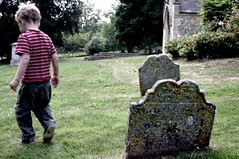
Bubonic Plague headstones

Bubonic Plague headstones (Photo credit: cenz)

The term Renaissance in itself, is defined as a “rebirth” or “reconstruction”. During this period of rebirth, humanism played a big factor as artists and musicians alike created works that displayed their individualism and artistic freedom. This creativity allowed for them to abandon the more strict ideals of the Medieval period. They were revered during their own lifetimes versus after their deaths, which made it different from Medieval times. The Renaissance era of music had their own style which reflected a smooth, polyphonic type of music. Even though sacred music remained very important during this time period, secular music was becoming even more popular. During these years, new instruments were being invented also. The lute being favored the most and was considered to be the family standard instrument for music and dancing.


“The Renaissance is a beautiful part of history filled with tales of regal etiquette, grand wealth, incredible artists and inventors, and a lifestyle many could enjoy.”  (http://www.realarmorofgod.com/renaissance-era.html)


This period wasn’t all beautiful and did indeed have an ugly side. Cruelty, oppression, poverty and disease, just to name a few. The Bubonic Plague also called “Black Death”, was responsible for killing half the world population of Europe! It was very contagious and quickly spread to those that may have been in close contact with one another. To even escape this plague, one had to move from the city into the country, which was easy enough for the wealthy, but the poor impoverished people couldn’t do this, so this ended up being their demise. My question is, “Why was the plague so bad in the city and not in the country?” I understand that not too many people would be in the country, at least not as much as in the city and was most likely congested with people. But once the plague was over, the people that survived, could return to the cities. Even with so much death, this time period wasn’t helped by their poor economic depression- since half the population died, the merchants didn’t have enough customers to even stimulate any type of economic recovery. Sounds depressing doesn’t it? So life in these times wasn’t all about glamour, gowns, wealth, and grand balls in which to attend; there were rough times as people tried to put their lives back on track and moving on with their lives after so much tragedy. I can’t imagine having to deal with multiple family members dying from a disease all at once, especially knowing there wasn’t an antidote to aid them in recovering.  


But on the brighter side, with the evolution of this era in Europe, came with it great inventions. Inventions such as the printing press, and an instrument called the astrolabe, which was a portable device used by sailors for navigational purposes; this device measured the relationships between the horizon and the sun and stars to get the latitude coordinates. I guess the GPS I have, has evolved many times over! But returning to the topic of the printing press, most books of this time were owned by Church clergy and were written in Latin.The Latin language was a scholar language and most people couldn’t read them. To write a book by hand took an enormous length of time just for one book, let alone writing several. The printing press made reading the books much easier; it was invented by Johann Gutenberg in 1445. It made the writing of books less expensive and the middle class were able to purchase and read them. Books like travel, romance, and poetry were published all over Europe and I imagine literacy wasn’t such a problem as it was before. 


Sources:


Every Cathedral Should Have Stained Glass

Every Cathedral Should Have Stained Glass (Photo credit: widdowquinn)

Having always been interested in history, I decided to start blogging about my family- my father was a Cornett. Maybe I should have majored in History instead of Marketing! Currently, I am focused on my fathers side of my family tree, and I am surprised at what I have found out in just a few days of researching. The Cornett side is very extensive but so very interesting at the same time. I found that once I get started, I cannot stop.Many years ago, I was given a copy of our genealogy that looks as if it was typed out, and included a few images; I’m sure many other family members were given this also. I have yet to acquire a book that was written by John Eldon Cornett, entitled, “Climbing The Right Ladder”. In this book, from my understanding, is a book about the origins of the Cornett family. One day I hope to purchase this book as it is a part of my family history. If it weren’t for the Internet, I wouldn’t have come as far as I have in my research! I want to share an image I found on a website called findagrave.com. I know it sounds kind of horrid, but I am glad to have found it, if only for the image of David Cornett and Phebe “Feby” Sutherland, who are my third great grandparents!
In conclusion, I would like to say that if there are family members out there who may be doing the same search as I am, please don’t hesitate to contact me. I am most willing to share my findings with you and maybe collaborate with you on any research you may have, that I may be missing.