Posts Tagged ‘England’

I have been researching the Cornett, Canute, and Sutherland family surnames off and on for the past few months. Along the way, I have met new cousins and created a few contacts, both professional and personal, as it relates to the topic of Genealogy. It seems that my family tree is one twisted tangle of little twigs. But I seem to think that there may be some vines intertwining with those twigs that cause me to search even deeper. I can almost picture myself spreading this vine curtain to see what’s inside, stepping into the past and being swallowed up as the curtain closes. Sounds like a creepy movie in a way. 


I have been reading up on the book I purchased a few months ago, titled, “Grayson County: A History in Words and Pictures”, I have also enjoyed looking at the photos of the first settlers to Grayson County, Virginia. The book encompasses a little less than 400 pages of fact written by the Grayson County Historical Society during the years 1792-1950. There are many interesting details and stories in this book that I will have to share at a later date. 
I have been most curious while searching for answers to all the mysteries of my family, I have yet to uncover the greatest mystery and a mountain of a brick wall called Alexander Sutherland. I hope to one day solve this with the help of my cousins, who happen to be also doing their own research on the same family surname. 


According to some, the Canute surname was believed to have actually been named “Carnutte”, stemming from Danish origin. There are many variations to the name and some also believe the name was of French origin. So really, who is correct? Is it speculation? How did they come up with this? I can understand the Danish part in this, as King Canute was most likely of that descent, as he was King of Denmark. But French? I’m not sure about that yet, although it could be very possible, I just need the cold, hard facts!


So if the Cornett family did descend from Carnutte, researching the Carnutte surname should be foremost on the list of priorities. It is said, and passed on from generation to generation that the Cornett family descended from King Canute II of Denmark. King Canute II was also known as Canute the Great, who reigned as King of Denmark during the time period of 995-1035. Canute the Great, being the son of Sweyn, King of Denmark.


Below is an excerpt I found on a web site dedicated to the genealogy of the Cornett family. The link source is also below if you would like to visit the site and utilize any other links on the site itself.

 If the Cornetts descended from Carnutte, one may begin with the Carnutte’s history. It is believed by some that the family is descended froKing Canutte II of Denmark. King Canutte II of Denmark “Canute the Great” (995-1035).  He was the first Danish King of England.  Under his rule Norway was conquered.  He was the son of Sweyn, King of Denmark.1 On the other hand, if the Cornetts were of French origin, it is likely that the family came across with William the Conqueror.
Erin Cornett was born in 1676 in Northumberland, England; he raised sheep. There is no record of his wife’s name. His son, Earl, was born in Southampton, England in 1696. He was a farmer and a member of the Church of England. He had seven sons: John, Roger, George, Francis, Frank, Jesse, and James. John Cornett …born in Southampton ,England in 1727. In 1740, he sailed to the Colonies with six of his brothers. They worked as indentured servants on an English  lord’s farm near Philadelphia, Pa. After gaining his freedom, John went to Henrico, Co.Va. (near Richmond) and raised tobacco for a living. He was taxed for land there on March 24,1747… His will lists that he had six sons and no daughters. His second wife was Elizabeth Bacon Mosby.She was a widow with one son… John died about 1776 at Elks Creek, Va. He was a member of St. John Episcopal Church. Four of his sons fought in the Revolutionary War (another source says six2). These four were later given land grants for their war service.William and Sam settled on Line Fork… Nathaniel and Roger settled in Benge, Clay Co.4 “[He] died about 1776 in Elm Creek, Virginia… his children were Rebecca Canute Cornett; David Cornett, born about 1750; James Canute Cornett, born about 1755; John Samuel Cornett, born about 1759; Nathanial Cornett born about 1760; William Jesse Cornett, born in 1761 in Henrico County, Virginia; and Roger Cornett, born about 1768.

My ancestors are William Jesse Cornett who died November 26, 1836 and is buried in Cornettsville Cemetary and Rhoda Gilliam, his first wife. They were married on May 7, 1787 in Washington County, Virginia”3  William Cornett enlisted twice in Virginia Revolutionary War units and received a pension (# W6723). His son, John (b. 1794) married Rachel (Smith) Kelly, and their son Russell (b. 1840) married Ailey Amburgey (b.1841), their last child being Sarah Elizabeth Cornett, my grandmother. Russell and Ailey’s brother, John J. Amburgey, had served together in Co B. of  Benjamin E. Caudill’s 13th Cavalry CSA.


Source: Mark S. Carroll/ Cornett Ancestry
Image Source: Getty Images
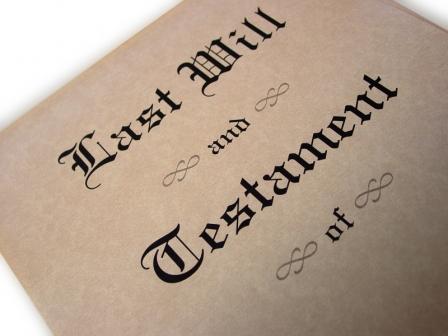
Ancestry.co.uk has made the company’s National Probate Calendar, 1861-1941, completely free to everyone until July 8th. You can search the index records to see where and when your ancestors died, see the original records to discover how much money or property they may have left behind, and you can use the information that you found, to order their wills and probate records from the Principal Probate Registry. (Eastman’s Online Genealogy Newsletter)


Wills and probate records are much more than a list of possessions that one of your ancestors may have left behind when they died; it can provide you with information on their social standing and wealth, if any, that they may have had. You can find out what they liked or kept as a family heirloom or even give you a head start to finding another ancestor that may have been listed in the will. How great is that? It’s free for a limited time, so take advantage of it! I love FREE stuff for genealogists! 

Image Source


Another collection that will help you discover lost riches in your family tree is Andrews Newspaper Index Cards, 1790-1976This unique card index was compiled in England from the 1790s until about 1970 and features a collection of notices from newspapers and various official sources, such as the London Gazette. Approximately 250,000 cards include announcements of births, marriages, obituaries, and deaths abroad; notices of wills, unclaimed estates, and filings under the Colonial Probates Act of 1892 (which recognized probates from courts in British possessions); and advertisements for missing persons and people seeking next of kin. The original newspaper clippings on the cards sometimes include annotations referring to additional information from other sources. (Ancestry.co.uk)


English: The lonely tree again! With new leaves.

English: The lonely tree again! With new leaves. (Photo credit: Wikipedia)

There are hundreds of web pages out there that display family trees, but are they your “go-to” source? Is it truthful or just word of mouth saying it’s so? Where did they get this information from? If it was from family members, that’s GREAT! But thinking back to when I was in elementary school, I remember my teacher playing a game with the entire class. She would call on one student at random, whisper something in their ear and tell the next person whatever it was she may have said. On and on it went around the room until the last student received the teachers’ message. Let’s just say that it wasn’t the same as what the teacher had told the first student. I guess you know where I’m headed with this…and if not, then I’ll explain. When people share things, no matter what the subject, in time they just become distorted.


One resource that I use almost daily to search my own family roots is the Mormon based website called Family Search. They place a religious emphasis on publishing materials or documents after a death, and therefore, baptism has inspired the creation of the world’s largest collection of genealogical materials. So with respect to this web site and others that are similar in nature, I thank you for this great resource tool. After all, do I just want a tree full of collected names or do I want the facts? Granted, sometimes you want to go to a resource that offers free information. But you have to think about what you will be getting in return. I, myself, want the facts that lead me on my journey to find out exactly who my ancestors were, how they lived, and where I come from.

From what I can understand through Family Search, they are in the midst of a gigantic project that will take the millions of records they have of microfilmed documents, for online viewing. When researching your family, think strongly about joining a genealogical society for the area in which you are searching. So for me, I would join one in Virginia, Kentucky, Scotland, and England; my ancestors from the Sutherland line originated from Denmark, Scotland, and England. So this is where I could start searching and collaborating with others that are trying to accomplish the same thing that I am.