Posts Tagged ‘FamilySearch’

information hydrant

information hydrant (Photo credit: Will Lion)

Sorting through documents, scanning, saving them to my hard drive on my laptop, and importing them into Family Tree Maker 2012 has helped me keep track of what I have and don’t have. Also, I have created a back up disc just in case my laptop decides it doesn’t want to operate anymore. This is very important to me because I had another laptop two years ago where the motherboard fried. All information was lost! Photos, college papers I had written, my resumé, my artwork, and many other important documents that I had saved over time. All GONE! Irretrievable.

Lately, I have been seeking information on my father, Billy Edward Cornett, and have discovered that he has become a brick wall of sorts. Not knowing him as a daughter should, my parents divorced when I was very young, I am finding that I don’t even know the details as to where he was born! After creating a research plan for my father, I hadn’t realized that I was lacking this particular information. Granted, I know that he was born in the state of Virginia in 1944 but that is all I know. I am lacking the information of the county, city and even the hospital in which he was born at. How do I request a birth record based only on this little bit of information I have of him? Where is his paper trail?


I have all the other documents I need, except this one little piece of paper that could tell me so much more! Frustrated doesn’t even begin to describe my feelings on this lack of data on my own father, no less. I am a family historian and genealogy buff, I should be able to find this piece of evidence at least. I have written emails to family members and no one seems to have a copy of his birth certificate or even know where this document could be; they don’t know who might even have it, if anyone even does. Dead end #1. I have searched for him on the Family Search web site. Dead end #2. I have searched Archives.com and nothing but census records and an SSDI reference. Dead end #3. I feel like I am overlooking something that is staring me right in the face!


My next step would be to contact the Virginia Vital Records office to see what information I can get about his birth. Since I am his next of kin I should have no problem ordering his birth certificate through them. This will have to wait until Monday morning as they are closed right now. Being on Hawaii time, I am 6 hours behind the east coast.


These are the documents I have on him to date:


  1. Death Record
  2. Obituary
  3. Marriage Certificate
  4. Marriage Certificate Receipt (Ha! My parents only paid $5 back in 1971)

So today, I ask myself, “Who’s My Daddy?”
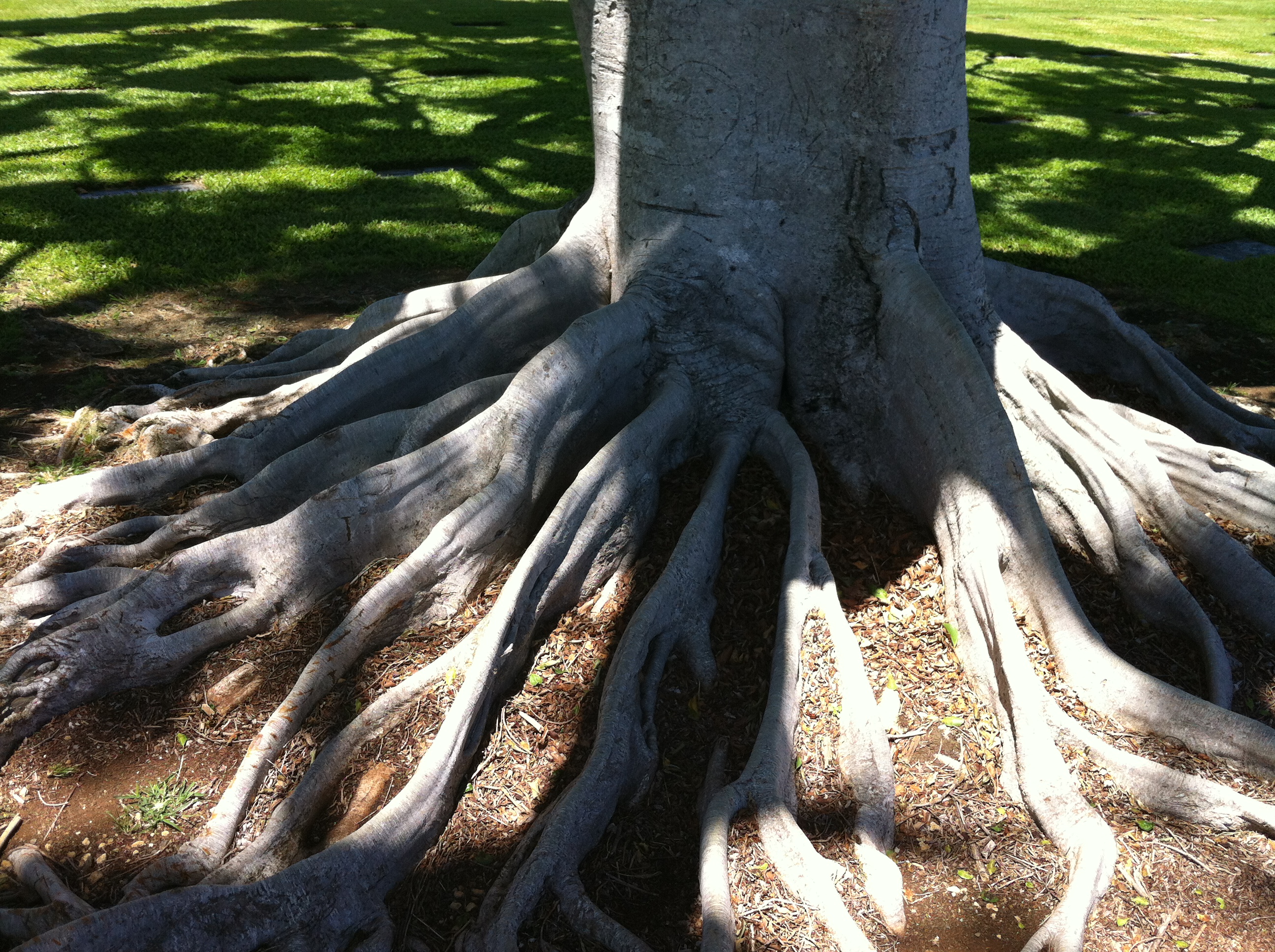


Nourishing Your Family Roots
Photo Credit: Kelly Vial via kellyvial.wordpress.com

Are you a “newbie” to the subject of Genealogy? I have been doing my own genealogy research as a hobby for several years now and over the years I have acquired some knowledge from fellow researchers and what works and what doesn’t. I hope to share with you some of that knowledge and help get you on the right path to tracing your own ancestry. It’s time to nurture the roots of your tree!

Some of the Basics

1. Start from the very beginning; use what you know and then proceed into the unknown. Document all your facts as this will be your flesh and bone foundation. It will help your overall strategy and try to also document family traditions, memories and the like. It’s all relative! No pun intended 🙂

2. Take notes! Interview family members, writing down the date, who was interviewed and create a list of questions for them to answer. You can videotape each interview or you can buy a voice recorder for all your communications.

3. Next, you should definitely create a research plan! I won’t say it is mandatory, but it will help you stay more organized; you can enter all the data on the research plan that you know on any particular person in your tree. You should create a research plan for every generation or person and include fields such as: names, birth and death dates, places, and sources where you can probably find the information you don’t have. Don’t forget to cite the source information that you have found also! This is very important as you probably won’t remember where you seen the data last. It could have been NARA (National Archives), FamilySearch, Ancestry, etc.

4. Research logs are also important- keep it accurate and up to date. On a research log you can document what you have searched such as the ancestor’s name, type of record, the date of your search, trips to the library and what was found, online resources and any side notes. Keeping in mind to record your findings for each ancestor and your results is an important part of your research. You will want to note what era your ancestor lived in and so on. You can find sample research logs through Cyndislist.com to help you create your own. It’s important that your fields have enough space in which to write your information in. Small field boxes that are too small will cause you to cram what you can into these areas which in turn, may cause you some confusion.

5. Your research notes should be able to be read and understood by anyone and should also indicate the reason behind your search.

6. Filing Systems are a great way to keep you organized as well. You should order them alphabetically by surname, color coded, then create sub folders that have ancestors and the years searched. If you don’t want to go that far, you can always just file them alphabetically by surname so they are easier to locate in the future.

7. Stay organized and keep your files in order from the start of your search for your family roots. It will save you a ton of time having to go through hundreds of pieces of documentation, notes, logs, plans, calendars, deeds and BMD records that you have accumulated over time. There are many different types of documents that you will accumulate over any given period of time, so keep it organized or you will be forever hunting for it later!

English: Headquarters of Ancestry.com (formerl...

English: Headquarters of Ancestry.com (formerly “The Generations Network”) in Provo. (Photo credit: Wikipedia)

Good morning all! This morning I am finally learning and teaching myself more about the Legacy software created my Millenia. What’s so great about this program versus others out there? I have tried many different ones, but I seem to get along with this one the best, and it has come in under the #2 spot in the Genealogy Software Review for 2011! But just to let you know, I tried the standard version, which is free by the way; but I absolutely love the options and features that are offered for the deluxe version!


PROS: Legacy can directly search Ancestry.com, FamilySearch, Genealogy.com and many other online services.”
CONS: Although this is a powerful database application, some others are more visually appealing.” 
(Data Source: Genealogy Software Review)


This program is cost effective especially when you look at what Legacy offers, some of the features that I found so far that I like the most are listed below.


  • Mapping feature which allows you to utilize the Microsoft Earth to pinpoint the places in your ancestors lives, automatically from within the program.
  • The Source Writer! I can’t forget to mention that- and who wouldn’t like to have their sources written out for them- just type in the necessary information, and you’re good to go!
  • Interview Reports- currently there are over 1000 pre-written interview forms you can use to interview family members or others when researching your family history. Cool huh?
  • Along with attaching pictures, sounds, and video to individuals, events, locations, and sources, you can now also attach any other kind of document (PDFs, Word files, etc.).
  • Recording DNA marker test results from different companies offering this type of service
But this is just a few of the features I like, that the deluxe version offers; there are plenty more! On the Legacy web site, they are offering several webinars on different topics, that you can listen in on, if you wish. I’ll post the links below.

I’m not getting paid for the content of this blog posting; I am just merely expressing my opinion on  the software itself and the features that I enjoy so far.


English: The lonely tree again! With new leaves.

English: The lonely tree again! With new leaves. (Photo credit: Wikipedia)

There are hundreds of web pages out there that display family trees, but are they your “go-to” source? Is it truthful or just word of mouth saying it’s so? Where did they get this information from? If it was from family members, that’s GREAT! But thinking back to when I was in elementary school, I remember my teacher playing a game with the entire class. She would call on one student at random, whisper something in their ear and tell the next person whatever it was she may have said. On and on it went around the room until the last student received the teachers’ message. Let’s just say that it wasn’t the same as what the teacher had told the first student. I guess you know where I’m headed with this…and if not, then I’ll explain. When people share things, no matter what the subject, in time they just become distorted.


One resource that I use almost daily to search my own family roots is the Mormon based website called Family Search. They place a religious emphasis on publishing materials or documents after a death, and therefore, baptism has inspired the creation of the world’s largest collection of genealogical materials. So with respect to this web site and others that are similar in nature, I thank you for this great resource tool. After all, do I just want a tree full of collected names or do I want the facts? Granted, sometimes you want to go to a resource that offers free information. But you have to think about what you will be getting in return. I, myself, want the facts that lead me on my journey to find out exactly who my ancestors were, how they lived, and where I come from.

From what I can understand through Family Search, they are in the midst of a gigantic project that will take the millions of records they have of microfilmed documents, for online viewing. When researching your family, think strongly about joining a genealogical society for the area in which you are searching. So for me, I would join one in Virginia, Kentucky, Scotland, and England; my ancestors from the Sutherland line originated from Denmark, Scotland, and England. So this is where I could start searching and collaborating with others that are trying to accomplish the same thing that I am.