Posts Tagged ‘Caithness’

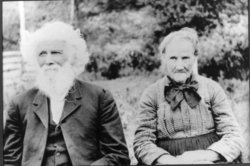
Image: Personal Collection
Also Found Same Image On Find A Grave Web Page
(Link Source Below)

Feby was my 3rd great grandmother, born in 1809 and died in 1885; she married David “Blue” Cornett on February 22, 1826 in Climes Branch, Grayson County, Virginia. Feby was born in Elk Creek, Grayson County, Virginia. Place of burial is at Central Cemetery in Flat Ridge, Grayson, Virginia. 


Ancestry.com File: 
ID: I117654
Name: Phebe SUTHERLAND
Sex: F
Birth: 15 MAR 1808 in Montgomery County, Virginia
Death: 5 MAR 1885 in Grayson County, Virginia


Father: Alexander A. SUTHERLAND b: 3 JUN 1743 in Sutherland, Caithness, Scotland
Mother: Margaret Elizabeth BRYAN b: 1771 in Culpepper County, Virginia

Marriage 1 David Blue CORNETT b: 3 NOV 1805 in Grayson County, Virginia

  • Married: 9 FEB 1826 in Grayson County, Virginia

Children

  1. Has No Children Allen CORNETT b: 27 MAR 1827 in Grayson County, Virginia
  2. Has Children Peter CORNETT b: 3 MAR 1829 in Grayson County, Virginia
  3. Has Children Rachel Isabell CORNETT b: 25 APR 1828 in Grayson County, Virginia
  4. Has Children James Monroe CORNETT b: 23 DEC 1831 in Grayson County, Virginia
  5. Has Children Lorenzy Dowell “Dow” CORNETT b: 24 SEP 1833 in Grayson County, Virginia
  6. Has Children Joseph Alexander CORNETT b: 16 MAR 1835 in Virginia
  7. Has Children Margaret Jane CORNETT b: 30 MAY 1837 in Grayson County, Virginia
  8. Has Children Dudley Jackson CORNETT b: ABT 1838 in Grayson County, Virginia
  9. Has Children Wesley Isom CORNETT b: 27 MAR 1841 in Grayson County, Virginia
  10. Has Children Barbara Eveline CORNETT b: 2 JAN 1843 in Grayson County, Virginia
  11. Has No Children Olive Melvine CORNETT b: 12 JUN 1844 in Grayson County, Virginia
  12. Has No Children Nancy Levine CORNETT b: 11 JUL 1846 in Grayson County, Virginia
  13. Has Children Stephen Thomas Columbus “Doc” CORNETT b: 19 MAR 1849 in Grayson County, Virginia
  14. Has No Children John Wesley CORNETT b: 13 JUL 1851 in Grayson County, Virginia
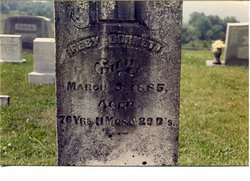

Photos Submitted by: Clinton G.


English: The Clan Sutherland Gatherin Stone In...

English: The Clan Sutherland Gatherin Stone Inscription on the stone “Ceann na Drochaide Bige”, meaning “The Head of the Little Bridge” This refers to the Clan Sutherland’s gathering place in Golspie, at which is the Gathering Stone. The inscription on the lower part reads in English, “The Chief of the Sutherlands Summons the Victorious Clan Sutherland to The Head of the Little Bridge”. There is also an old inscription on the top part that is in Gaelic. (Photo credit: Wikipedia)

As you may know by reading my past blog entries, I have been researching my Scottish ancestral lines beginning with the Sutherland surname. My ancestors were mainly from the Caithness and Edinburgh region (now called Midlothian, I think). Scottish names are as diverse and colorful as the country they represent. 


There is so much to write about when you think of Scotland. I could write about the culture, food or whiskey, or just the people and I would probably be typing out a blog post that may be uninteresting to some of you, as it would probably be closer to a book than a blog entry. There are many web sites that I could refer you to, just on Scotland’s Genealogy, but that would take all the fun out of searching and finding it yourself! 


In all truth, I haven’t completed much research this week and feel like I have neglected my poor blog page. I had been trying to post daily on a variety of different topics, but not this week. In today’s blog, I will be discussing some of the customs and traditions of my Scotland family. 


Scotland clothing mainly features the tartan (or plaid), which is the traditional dress of the people. Some mainlanders’ may think that a man wearing a “dress” is too feminine, therefore that makes the man wearing it, also more feminine. That is certainly not the case. It has more to do with tradition and their own culture than just flouncing around in a skirt all day, every day. The kilt is worn on special occasions much like our suit and tie events that we have in the United States. The Scots mostly wear these kilts to weddings and formal gatherings. 


Many years ago men wore one large sheet of tartan cloth over a long shirt. It was folded in such a way as to form the kilt shape as well as covering the torso and pinned at the shoulder. Have you seen the movie, Braveheart? The kilt was used as a blanket when sleeping outdoors and was easy to move around in. When formal armies were formed, a more robust garment was needed and the kilt as we know it was made.The kilt also represented their own Clan family. There were different kilts that were worn in battle a long time ago, but these were the more muted shades of the same tartan, almost like a camouflage I would imagine.